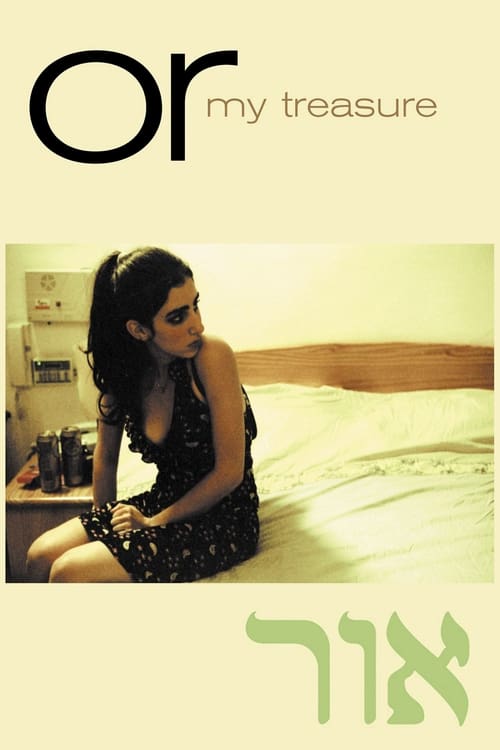
Or (My Treasure)
2004
No user ratings available yet
Representation score: 6.5 out of 10

Representation Score
Excellent
2014
Director
Keren Yedaya
Runtime
94 minutes
Average Rating
No ratings yetNew Showbiz Analysis
Keren Yedaya’s work excels in social realism, particularly through its critique of institutional stability. The film portrays underrepresented identities with significant influence and challenges traditional cultural narratives about the nuclear family and state support. However, the film lacks explicit representation for LGBTQ+ identities and specific clinical disabilities. These omissions prevent a higher score in those specific categories, as the narrative focus remains strictly on socioeconomic and interpersonal struggles. Ultimately, the film is a powerful study of systemic inequality. It uses its setting to provide a multi-ethnic perspective that avoids the homogeneity often found in mainstream media.
Category Breakdown
The film does not prominently feature LGBTQ+ identities. There is no significant evidence of non-traditional gender expressions among the main characters.
The narrative focuses on the female experience, exploring the role of women under extreme conditions. It challenges conventional power hierarchies by highlighting the instability and conflict in complex, often violent, power dynamics.
The film presents a nuanced, multi-ethnic urban landscape. By focusing on underprivileged socioeconomic groups, it avoids depicting a homogeneous or privileged demographic, reflecting a diverse, lived reality.
The story critiques established socioeconomic structures, portraying the nuclear family and state stability as fractured. It frames survivalist behaviors as logical responses to an oppressive economic environment.
There is no explicit focus on visible or neurodivergent disabilities. The film instead explores the psychological impact and mental strain caused by living in a high-stress, precarious environment.
Present on Screen
Limited or Absent
Official Synopsis
Moshe and Tami are a couple, Moshe is in his fifties and Tami is in her early twenties. They live together in a cruel and violent relationship, from which Tami seems unable to set herself free. Tami and Moshe are father and daughter...
2004
1994

2017
2016

2009

2014
2015
2014
No reviews yet. Be the first to share your thoughts on this movie!
Use the rating form above to leave a star rating and optional review.