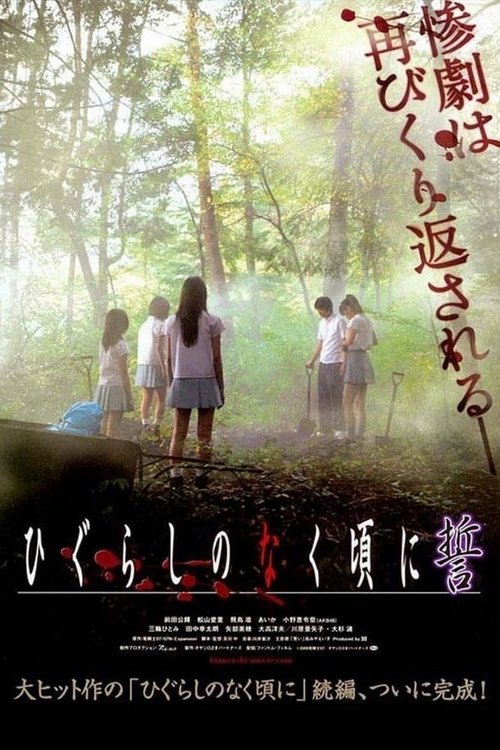
Shrill Cries: Reshuffle
2009
No user ratings available yet
Representation score: 6.5 out of 10

Representation Score
Fair
2008
Director
Ataru Oikawa
Runtime
106 minutes
Average Rating
No ratings yetNew Showbiz Analysis
Shrill Cries of Summer operates as a localized psychological horror, focusing on atmospheric dread and communal suspicion. The narrative is centered on a closed-environment setting, which inherently limits the scope of diverse representation. The film's emphasis is on the internal tensions within a homogeneous village. By centering a female-dominated social group, it avoids traditional male-centric action clichés. However, it does not delve into the complexities of multi-layered identities or broader societal issues.
Category Breakdown
The film does not explicitly confirm any LGBTQ+ characters or explore non-straight relationships. While the story revolves around a female-centric social circle, it does not engage with LGBTQ+ identities.
The story centers on a female-dominated social group, while the male protagonist observes the collective. The narrative highlights the dynamics within this predominantly female community.
The film is set in a remote mountain village that seems culturally and ethnically homogeneous. The narrative focuses on the localized community dynamics without showcasing a diverse cast.
The film explores the tension between an outsider and an insular community, delving into village folklore and social isolation without directly critiquing specific institutions.
There is no information available regarding the inclusion of characters with physical or neurodivergent disabilities.
Present on Screen
Limited or Absent
Official Synopsis
Early summer, Keiichi had just moved to a remote mountain village. As he becomes close friends with a group of girls, he was enjoying his life in the village. However when he starts to become suspicious that his friends may be deeply involved in successive murders that occur every summer, the situation around Keiichi gradually starts to turn into something more sinister.
2009

2001
1998

2001
2005
2018

2012
2021
No reviews yet. Be the first to share your thoughts on this movie!
Use the rating form above to leave a star rating and optional review.