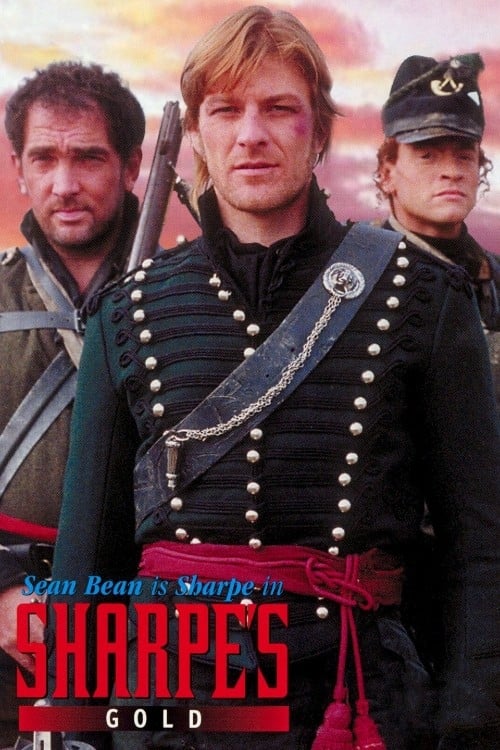
Sharpe's Gold
1995
No user ratings available yet
Representation score: 0.8 out of 10

Representation Score
Limited
2008
Director
Tom Clegg
Runtime
137 minutes
Average Rating
No ratings yetNew Showbiz Analysis
Sharpe's Peril is a conventional historical drama that prioritizes period accuracy and traditional narrative hierarchies. It adheres to established genre clichés, focusing on individual merit within a rigid military structure. The film does not seek to disrupt expectations regarding gender, race, or social order. Instead, it provides a depiction of the Napoleonic era that aligns with the historical status quo and traditional Western storytelling conventions. While the setting involves the East India Company, the narrative remains centered on the protagonist's leadership and the preservation of military authority.
Category Breakdown
The film follows a strictly heterosexual and cisgender-focused structure. There is no evidence of non-binary or LGBTQ+ identities, and romance is limited to traditional courtship scenarios.
Women play supporting roles or appear as peripheral civilians, reflecting the era's social constraints. Men dominate the narrative with their roles in the military hierarchy.
The cast remains predominantly Anglo-Saxon, reflecting the historical homogeneity of the British Army. The narrative maintains a traditionalist approach without utilizing color-blind casting.
The story prioritizes Western institutional values like military discipline and patriotism. Colonial elements are framed through military duty rather than critiquing imperialist structures.
Characters are defined by physical capability and military utility. There is no focus on neurodivergence or physical disabilities as central narrative traits.
Present on Screen
Limited or Absent
Official Synopsis
Our story begins at the end of Sharpe's Challenge. Sharpe and Harper are en route to Madras when they encounter a baggage train from the East India Company traveling through hostile territory. Chitu, a legendary bandit leader in control of the area, strikes fear in the members of the party. When an attack occurs Sharpe takes control of the situation, leading the group 300 miles through enemy territory and training the disorganized, rag-tag group to be proper soldiers. Despite all these responsibilities, Sharpe still manages to find time for a little romance...
1995

1979

1995
1964
1996

2001

2006

1995
No reviews yet. Be the first to share your thoughts on this movie!
Use the rating form above to leave a star rating and optional review.