
Time Adventure: 5 Seconds Til Climax
1986
No user ratings available yet
Representation score: 4.2 out of 10
Representation Score
Excellent
2025
Director
Vinciane Millereau
Runtime
103 minutes
Average Rating
No ratings yetNew Showbiz Analysis
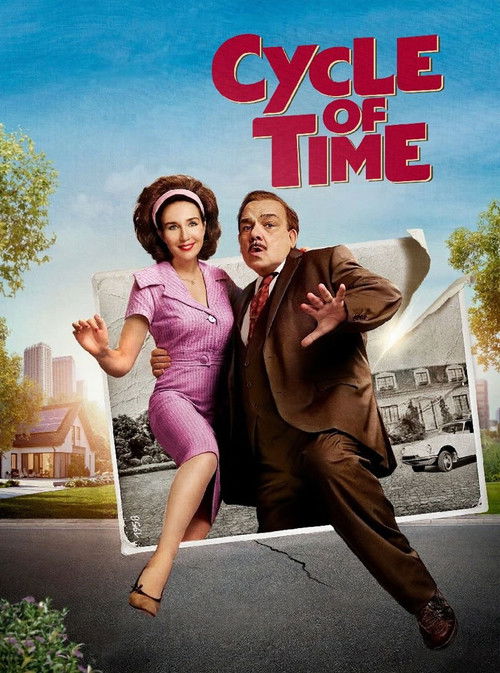
Cycle of Time (2025) uses a science-fiction lens to examine how social structures and gender roles evolve over decades. The film's strongest asset is its subversion of traditional gender hierarchies, placing a woman in a position of systemic economic power while the male lead navigates modern vulnerabilities. While the film provides a nuanced look at mental health and socioeconomic changes, it remains largely Eurocentric. The narrative focuses more on temporal and socioeconomic shifts than on diverse racial or queer identities. Ultimately, the film succeeds as a comparative study of identity, showing how it is reshaped by the friction between mid-century traditions and a volatile, high-tech future.
Category Breakdown
The film centers on a heterosexual relationship between Helene and Michel. There are no explicit queer narratives or non-cisgender identities within the main character arcs.
The story transforms Helene from a domestic figure into a powerful bank executive, challenging traditional gender roles. Michel, on the other hand, faces the vulnerability of unemployment and depression.
The narrative primarily focuses on French historical and contemporary contexts, with a predominantly white cast. While there are diverse performers like Céline Fuhrer, the story does not explore racial diversity deeply.
The film critiques Western institutions by contrasting the stability of the 1950s with a technology-dominated future. It explores the instability caused by the transition from tradition to modern capitalism.
Mental health is central to the plot through Michel’s struggle with depression. His psychological state is integrated into the core conflict rather than treated as a peripheral issue.
Present on Screen
Limited or Absent
Official Synopsis
In 1950s France, Helene and Michel lead a simple life until a freak accident in 2025 leads to Helene becoming a bank executive and Michel struggling with unemployment and depression. Their children grow up in a technology-dominated world.
1986

1969

2020
1973

2023

2026
2016

2001
No reviews yet. Be the first to share your thoughts on this movie!
Use the rating form above to leave a star rating and optional review.