The Storm Makers
2014
No user ratings available yet
Representation score: 6.4 out of 10
Representation Score
Limited
1964
Director
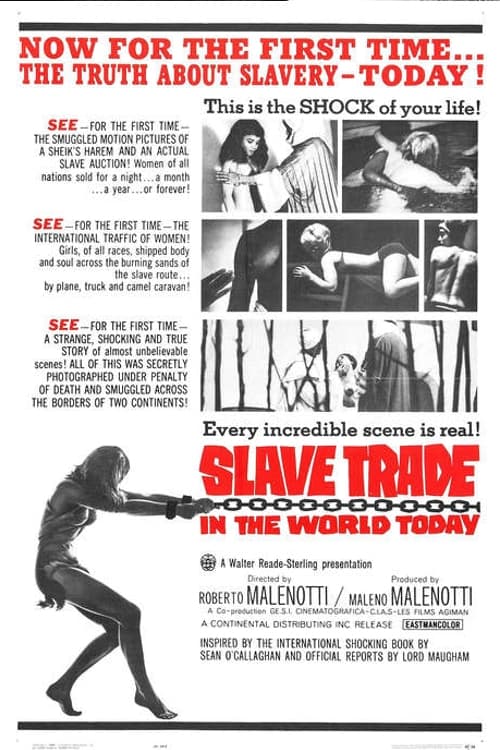
Folco Quilici, Maleno Malenotti, Roberto Malenotti
Runtime
90 minutes
Average Rating
No ratings yetNew Showbiz Analysis
This documentary serves as a socio-political exposé of modern slavery under dictatorial rule. It achieves high marks for racial visibility by centering its lens on African nations and the movement of people toward Asia, disrupting a typical Eurocentric gaze. However, the overall score is moderated by the lack of ability to act afforded to the subjects. While the film documents systemic oppression and gendered vulnerability, the victims are often portrayed as passive recipients of violence rather than characters with autonomy. Ultimately, the work functions as a significant historical document of systemic critique. It prioritizes the documentation of human rights violations over identity-based social exploration or character-driven subversion of hierarchies.
Category Breakdown
The documentary focuses on the mechanics of the slave trade and systemic exploitation. There are no visible LGBTQ+ characters or narratives addressing non-straight relationships.
The film depicts the victimization of women within the slave trade. However, these subjects lack ability to act and are portrayed as passive recipients of systemic violence rather than active participants.
The film centers on African nations and the movement of people toward Asia. It provides significant visibility to underrepresented populations by documenting the lived realities of non-Western groups.
The narrative critiques how global economic and religious movements are co-opted by oppressive systems. It highlights the intersection of dictatorship and human trafficking through a socio-political lens.
There is no specific evidence regarding the portrayal of individuals with physical or neurodivergent disabilities within the film.
Present on Screen
Limited or Absent
Official Synopsis
The film documents modern slave trade through a number of African countries, under dictatorship rule. The filming was conducted both in public places, and sometimes with the use of hidden cameras, for high impact scenes of nudity, sex, and violence - and a few surprises, as slaves made out of peregrins to Asia, and slave traders paid in traveller checks.
2014
2020
2006
2002
2003
2004
2015
2012
No reviews yet. Be the first to share your thoughts on this movie!
Use the rating form above to leave a star rating and optional review.