
VeggieTales: MacLarry and the Stinky Cheese Battle
2013
No user ratings available yet
Representation score: 2.4 out of 10
Representation Score
Minimal
2010
NRDirector
Mike Nawrocki
Runtime
49 minutes
Average Rating
No ratings yetNew Showbiz Analysis
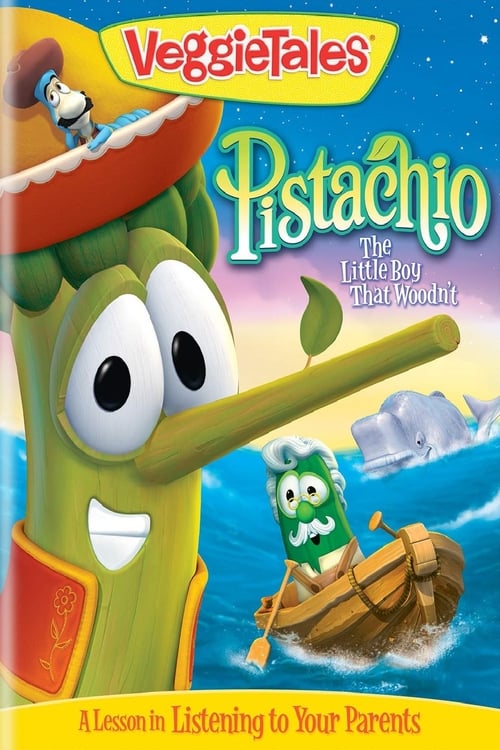
Pistachio is a traditional production that uses a storybook aesthetic to reinforce conventional social and moral hierarchies. The narrative focuses on stabilizing existing power dynamics by emphasizing parental guidance and religious adherence. The film operates within a conservative framework, prioritizing obedience and the sanctity of the nuclear family. It avoids moral relativism or identity politics, creating a homogeneous environment. Because the characters are anthropomorphic vegetables, the film bypasses racial and ethnic identity, avoiding stereotyping but also lacking engagement with diverse human experiences.
Category Breakdown
The film follows a strictly straight-centered framework, focusing on traditional gender roles and excluding any representation of LGBTQ+ identities or non-assuming gender matches what was assigned at birth gender expressions.
The movie emphasizes traditional gender roles and domestic hierarchies, portraying the father as the primary source of wisdom and authority.
The cast is made up entirely of anthropomorphic vegetables, which prevents any racial or ethnic identity. While this avoids stereotyping, it also avoids engaging with diverse human experiences.
The story promotes a traditional Christian morality, reinforcing the importance of religious instruction and the Western nuclear family structure.
The film does not portray any visible or invisible disabilities. Characters operate within a standard capacity of ability to act without exploring neurodivergence or physical disability.
Present on Screen
Limited or Absent
Official Synopsis
A family adventure featuring a helpful lesson in listening to your parents and the importance of family. This creative parody of the beloved story of Pinocchio is a classic retelling with a clever VeggieTales twist. Once upon a time, a lonely toymaker named Gelato decided to carve a little boy out of wood. Imagine his surprise when he learned that this little toy boy could walk ... and talk ... and definitely had a mind of his own! When Pistachio tries to do things his way he lands in a "whale" of a situation! Will he decide to listen to the wisdom of a loving father in time to save his whole family from becoming fish food?
2013
2002

1997
1940

2012

2022
1995
2009
No reviews yet. Be the first to share your thoughts on this movie!
Use the rating form above to leave a star rating and optional review.