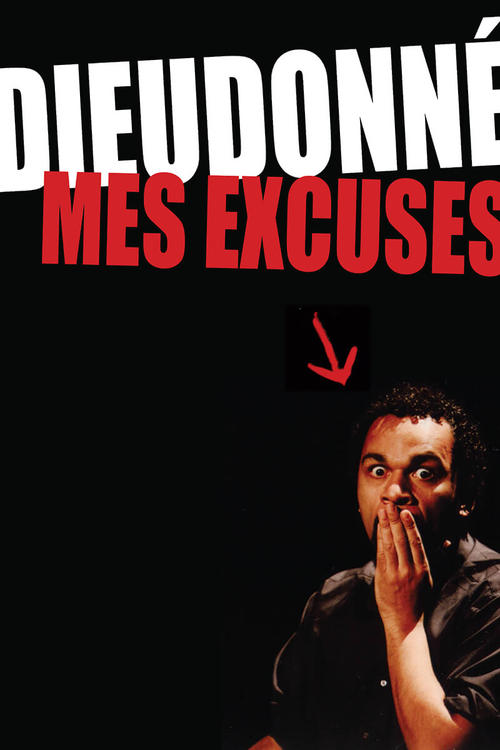
Dieudonné - Mes excuses
2005
No user ratings available yet
Representation score: 4.5 out of 10
Representation Score
Fair
2010
Director
Daniel Conversano
Runtime
0 minutes
Average Rating
No ratings yetNew Showbiz Analysis
Dieudonné's performance is a provocative piece of social commentary that uses humor to challenge established norms. It excels at disrupting Western-centric historical narratives by addressing colonial power imbalances and global geopolitical intersections. However, the film's focus is heavily centered on a singular male perspective, which limits the visibility of LGBTQ+ identities and gender diversity. Ultimately, the work is notable for its willingness to critique systemic power and institutional authority, making it a significant, albeit narrow, analysis of social hierarchies.
Category Breakdown
The film does not include any explicit LGBTQ+ characters or narratives. Instead, it focuses on geopolitical satire and historical social structures.
The story primarily follows a single male perspective typical of stand-up comedy. It is unclear whether the work challenges traditional gender roles or adheres to conventional gender stereotypes.
The film explores racial themes by examining master-slave relationships in 16th-century Martinique and moving away from Anglo-centric views by focusing on Middle Eastern politics.
The work challenges Western dominance by satirizing institutional medicine and exploring colonial plantation dynamics. It emphasizes a skeptical, anti-institutional stance through its comedic approach.
There is no information about the portrayal of physical or neurodivergent disabilities in this production.
Present on Screen
Limited or Absent
Official Synopsis
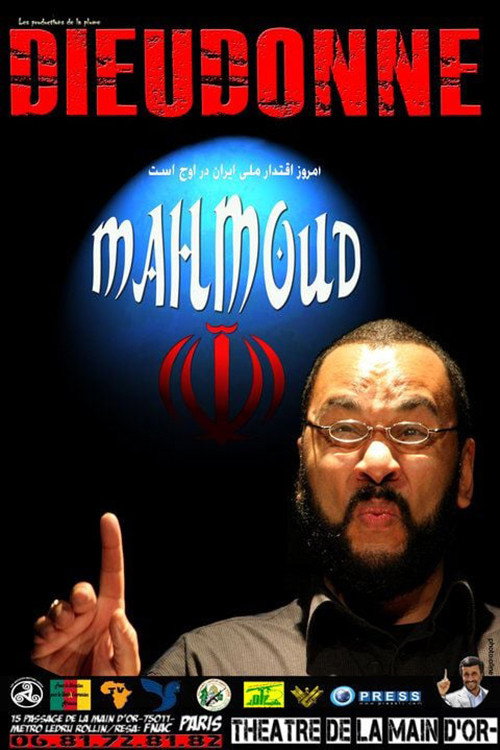
Filmed at the Théâtre de la Main d'Or on October 22, 2010. Dieudonné returns with "Mahmoud", in what can be described as "a contemporary artistic testimony with a strong humorous content." He tells us about the incredible events that led him to meet the Iranian president, Mahmoud Ahmadinejad. He takes us back in time and transports us to the 16th century on a plantation in Martinique to discuss the courteous relationships between masters and their slaves. He also talks about the all-powerful and revered field of medicine... only to mock it, of course. And it feels good!
2005

2014
2011

2019
2017
2017
2018

2017
No reviews yet. Be the first to share your thoughts on this movie!
Use the rating form above to leave a star rating and optional review.