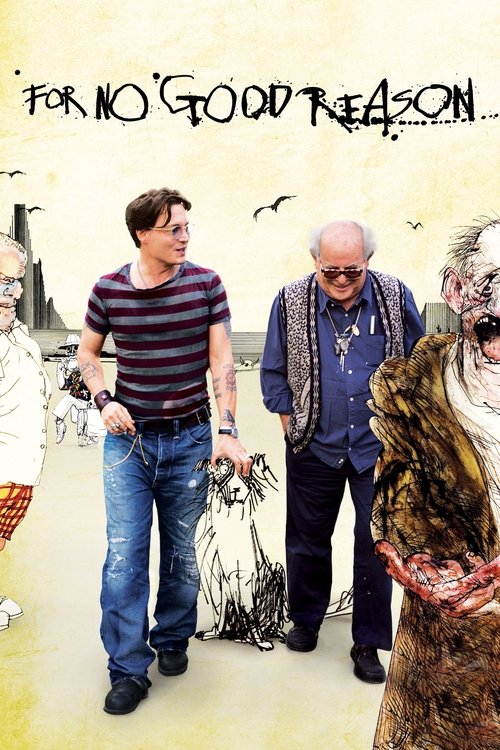
For No Good Reason
2012
No user ratings available yet
Representation score: 5.0 out of 10

Representation Score
Fair
1999
Director
Chuck Workman
Runtime
88 minutes
Average Rating
No ratings yetNew Showbiz Analysis
The film serves as a historical examination of a counter-cultural movement defined by its resistance to conventional social structures. It succeeds in documenting the queer history of its central figures and the profound influence of Black musical traditions on the Beat aesthetic. However, the film is limited by the historical reality of its subject matter. The heavy emphasis on masculine intellectualism results in a lack of significant roles for female figures, and the narrative remains centered on Anglo-American literary figures. Ultimately, the documentary provides a nuanced look at the forces that challenged mid-century social norms, even while reflecting the era's inherent social limitations.
Category Breakdown
The film centers on Allen Ginsberg and William S. Burroughs, highlighting their contributions to queer history. It delves into their personal experiences and the impact of their identities on American literature.
The narrative focuses heavily on a male-dominated circle of intellectuals. While historically accurate to the era, the film lacks significant roles for female figures.
The documentary acknowledges the importance of Black musical innovation by connecting it to bebop jazz. However, the primary focus remains on Anglo-American literary figures.
The film highlights the movement's rejection of traditional morality and social hierarchies. It portrays the Beats as a force challenging mid-century American conformity and capitalism.
There is no significant evidence regarding the portrayal of visible or invisible disabilities within this historical chronicle.
Present on Screen
Limited or Absent
Official Synopsis
Traces the Beats from Allen Ginsberg and Jack Kerouac's meeting in 1944 at Columbia University to the deaths of Ginsberg and William S. Burroughs in 1997. Three actors provide dramatic interpretations of the work of these three writers, and the film chronicles their friendships, their arrival into American consciousness, their travels, frequent parodies, Kerouac's death, and Ginsberg's politicization. Their movement connects with bebop, John Cage's music, abstract expressionism, and living theater. In recent interviews, Ginsberg, Burroughs, Kesey, Ferlinghetti, Mailer, Jerry Garcia, Tom Hayden, Gary Snyder, Ed Sanders, and others measure the Beats' meaning and impact.
2012
2010

1973

2013

1985
2013

2012
1984
No reviews yet. Be the first to share your thoughts on this movie!
Use the rating form above to leave a star rating and optional review.