
Missing Mom
2016
No user ratings available yet
Representation score: 3.2 out of 10
Representation Score
Limited
2014
Not RatedDirector
Suki Hawley, David Beilinson
Runtime
80 minutes
Average Rating
No ratings yetNew Showbiz Analysis
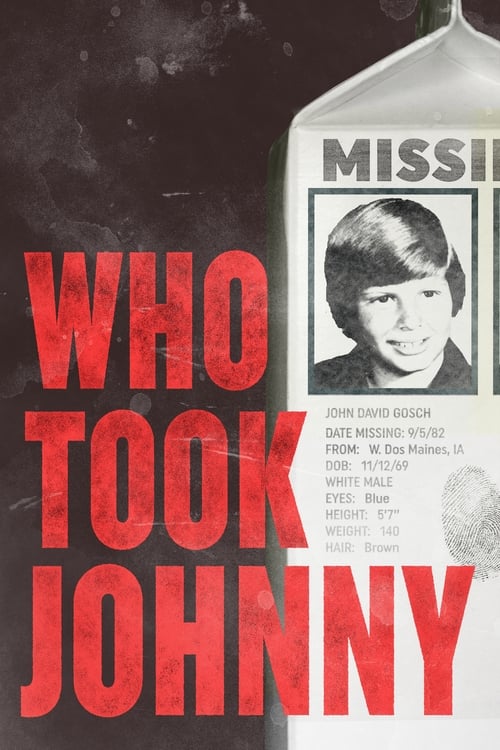
Who Took Johnny is a character-driven film that focuses on a mother's quest for truth and the shortcomings of official investigations. It successfully positions a female protagonist as the central figure, showcasing her resilience against systemic failures. However, the film maintains a traditional demographic focus, avoiding engagement with broader social issues or diverse identities. Instead, it zeroes in on a specific local event.
Category Breakdown
The story centers on a maternal quest and a missing family member. There are no LGBTQ+ characters or non-straight relationships shown in the film.
Noreen Gosch is the main character who demonstrates great strength and resilience. The film challenges the idea of passive females by highlighting her determined search for the truth.
The documentary focuses on a white family in Iowa. The story reflects the typical homogeneous makeup of midwestern true-crime stories without mixing in different races.
The film examines a loss of trust in law enforcement and societal systems. It highlights an individual's struggle for truth rather than relying on community or institutional support.
There is no evidence of neurodivergence, physical disabilities, or mental health issues being central to the story.
Present on Screen
Limited or Absent
Official Synopsis
An examination of the infamous thirty-year-old cold case of Iowa paperboy Johnny Gosch, the first missing child to appear on a milk carton. The film focuses on Johnny’s mother, Noreen Gosch, and her relentless quest to find the truth about what happened to her son. Along the way there have been mysterious sightings, bizarre revelations, and a confrontation with a person who claims to have helped abduct Johnny.
2016

2015

2018

2026

2007

2011

2011
2012
No reviews yet. Be the first to share your thoughts on this movie!
Use the rating form above to leave a star rating and optional review.