Beyond Remedy - Jenseits der Angst
2010
No user ratings available yet
Representation score: 2.3 out of 10
Representation Score
Limited
1961
UnratedDirector
Clark L. Paylow
Runtime
71 minutes
Average Rating
No ratings yetNew Showbiz Analysis
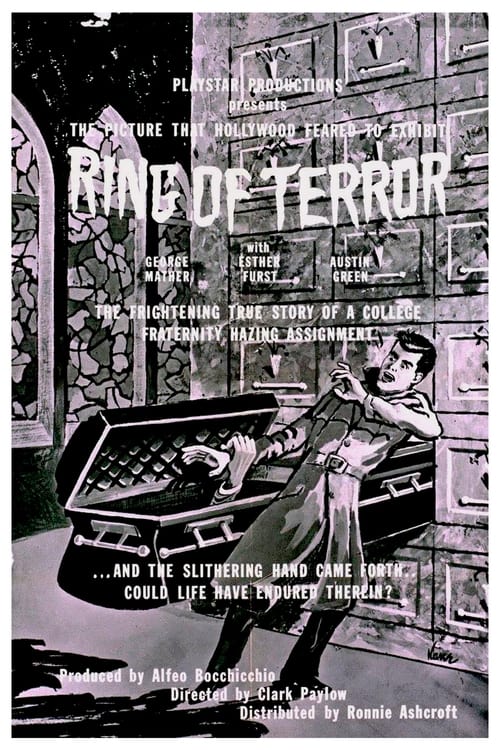
Ring of Terror is a product of its time, adhering to the standard industry clichés of 1961 horror. The focus on fraternity pledging naturally centers the film around male-dominated hierarchies and traditional Western institutional values. The production lacks intentionality regarding the overlapping aspects of identity or challenging social norms. It reflects the demographic and social constraints of the early 1960s, prioritizing established genre conventions over diverse representation.
Category Breakdown
The film does not include any characters with non-traditional gender identities or same-sex relationships. The fraternity setting emphasizes traditional social structures.
The story revolves around male-dominated fraternity hierarchies and reinforces traditional masculine leadership typical of early 1960s cinema.
The college setting and era suggest a likely homogeneous cast. There is no evidence of diverse character roles or actors from different racial backgrounds.
The narrative focuses on Western collegiate rituals and fraternity life. It aligns with established social rites of passage within a Western academic context.
No characters with visible or invisible disabilities play significant roles in the plot. Physical or mental limitations in this era often served as mere tension devices.
Present on Screen
Limited or Absent
Official Synopsis
A group of medical students undertake some silly and frightening endeavors in order to pledge a fraternity.
2010
1966

2010
2008

2013
1968

2019
1969
No reviews yet. Be the first to share your thoughts on this movie!
Use the rating form above to leave a star rating and optional review.