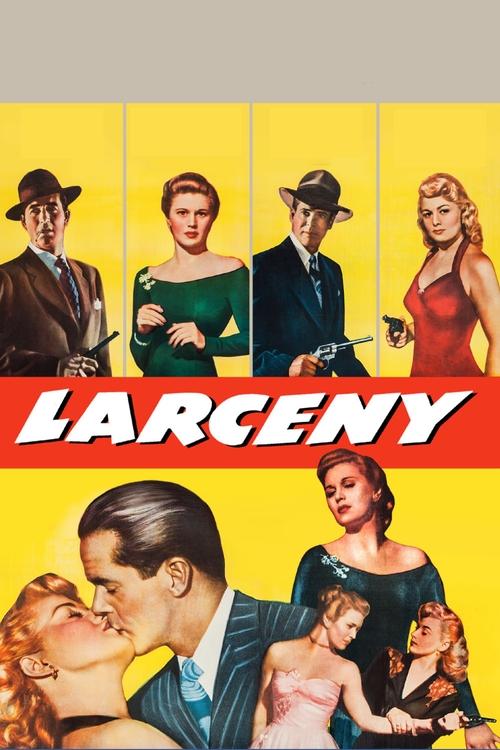
Larceny
1948
No user ratings available yet
Diversity score: 3.2 out of 10

1952
NRDirector
Rudolph Maté
Runtime
89 minutes
Average Rating
No ratings yetSynopsis
In World War II France, American soldier Michael Blake captures, then loses Nazi-collaborator art thief Paul Rona, who leaves behind a gem studded gauntlet (a stolen religious relic). Years later, financial reverses lead Mike to return in search of the object. In Paris, he must dodge mysterious followers and a corpse that's hard to explain; so he and attractive tour guide Christine decamp on a cross-country pursuit that becomes love on the run...then takes yet another turn.
Overall Score
Limited
Category Breakdown
LGBTQ+ Representation
The story follows a traditional heterosexual romance between Michael Blake and Christine. No non-cisnormative identities or critiques of heteronormativity are present.
Gender Representation
The film relies on conventional 1950s gender roles. While Christine acts as a guide, the male protagonist drives the primary investigation and physical action.
Racial & Ethnic Diversity
The narrative focuses on Western and European characters within the context of WWII France. There is no indication of significant racial blending or diverse ethnic representation.
Religious & Cultural Diversity
The plot centers on the recovery of a stolen religious relic. It follows traditional Western storytelling tropes rather than offering a critique of institutions.
Disability Representation
There is no documented evidence of characters with visible or invisible disabilities in this film.
Strengths
Areas for Improvement
AI Analysis
The Green Glove is a mid-century crime mystery that adheres strictly to the cinematic norms of its era. The narrative architecture prioritizes adventure tropes and established social hierarchies over any intentional subversion of identity. While the film explores post-war tensions and the pursuit of a stolen relic, it lacks depth in its representation of race, gender, or sexual orientation. The characters function primarily as drivers for a traditional romantic and investigative plot. Ultimately, the film serves as a competent genre piece but does not attempt to disrupt or expand the conventional social expectations of the 1950s.
No reviews yet. Be the first to share your thoughts on this movie!
Use the rating form above to leave a star rating and optional review.