Muqabla
1993
No user ratings available yet
Representation score: 1.1 out of 10
Representation Score
Limited
1995
Director
Bunty Soorma, Shekhar Kapur
Runtime
156 minutes
Average Rating
No ratings yetNew Showbiz Analysis
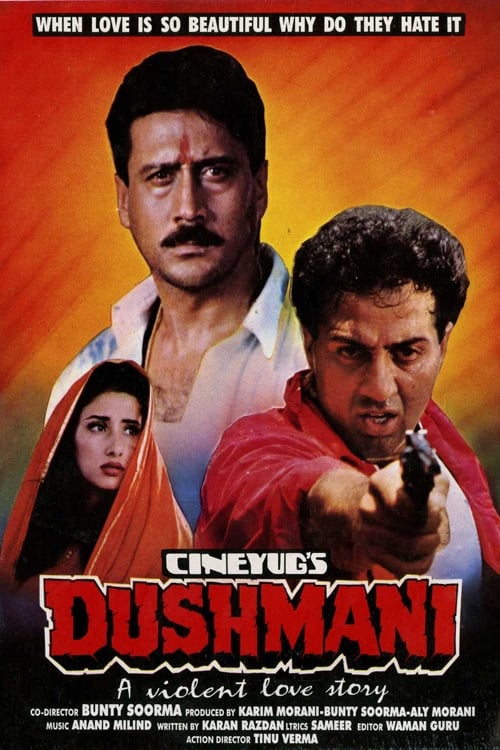
Dushmani: A Violent Love Story is a typical mid-90s action-romance that prioritizes genre conventions over social subversion. The narrative is built around traditional patriarchal structures, where male-led gang warfare and family honor shape the plot's direction. While the film offers strong regional representation through its South Asian cast and localized cultural setting, it remains within a narrow cultural framework. It relies on established clichés of star-crossed lovers and binary gender roles, offering little room for exploring multiple aspects of identity. Ultimately, the film functions as a traditionalist piece. It reinforces existing social hierarchies and familial obligations rather than challenging systemic norms or presenting diverse identity perspectives.
Category Breakdown
The film focuses on a traditional heterosexual relationship between two main characters. It does not include any representations of non-straight or non-cisgender identities or stories that challenge the assumption that everyone is straight.
The central conflict and territorial disputes are driven by male gang leaders. Although Sapna is a significant character, her role is primarily defined by her romantic connection to the male protagonist rather than by her own independent actions.
The cast is mainly composed of South Asian actors, reflecting the regional context of the Indian film industry. The story stays within a localized framework without exploring diverse ethnic identities.
The plot emphasizes family honor, patriarchal lineage, and traditional social hierarchies. It reinforces established familial obligations rather than exploring secular or anti-institutional themes.
There are no visible or mentioned depictions of physical or neurodivergent disabilities within the narrative.
Present on Screen
Limited or Absent
Official Synopsis
In order to settle personal scores; two gang leaders, Jai Singh and Oberoi fight for many years in gang-wars. There enmity multiplies when Jai's younger brother, Suraj falls in love with Oberoi's sister, Sapna which forces Suraj and Sapna to elope. Jai then locates the duo and brings them back to try and convince Oberoi to get them marry albeit successful.
1993

2015
1992

2012
1991

2005

2021
1996
No reviews yet. Be the first to share your thoughts on this movie!
Use the rating form above to leave a star rating and optional review.