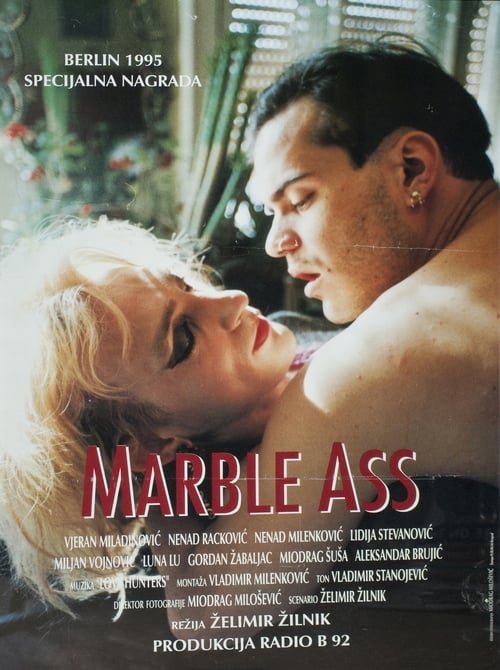
Marble Ass
1995
No user ratings available yet
Representation score: 6.7 out of 10

Representation Score
Excellent
1999
RDirector
Jasmin Dizdar
Runtime
107 minutes
Average Rating
No ratings yetNew Showbiz Analysis
Beautiful People excels as a sophisticated exploration of social fragmentation, using the Bosnian War to challenge typical war drama clichés. Its strongest point is the nuanced, multi-ethnic portrayal of Balkan identities that avoids simplistic moral binaries. However, the film's focus is narrow, emphasizing geopolitical and ethnic tensions over individual identity explorations such as LGBTQ+ or disability representation. While it captures systemic trauma, it lacks specific character-driven narratives for these groups. Ultimately, the film offers a powerful critique of Western power dynamics and social hierarchies, providing a complex view of humanity under extreme conditions.
Category Breakdown
The film does not prominently feature LGBTQ+ narratives or characters that significantly influence the main storyline. Instead, it focuses on ethnic and national identities.
Female characters play a significant role in navigating the challenges of war and managing societal collapse. The narrative highlights their resilience and emotional labor rather than traditional masculine leadership.
The film stands out by showcasing a variety of Bosniak, Serb, and Croat identities. It avoids simplifying the conflict and instead uses these diverse backgrounds to drive the central tension.
The story questions the effectiveness of Western institutions and the shortcomings of global political structures. It examines how survivalist behaviors challenge traditional ethical norms during the Bosnian conflict.
The film illustrates the collective psychological impact of war rather than focusing on individual characters with visible disabilities. It lacks detailed stories about neurodivergence or physical impairments.
Present on Screen
Limited or Absent
Official Synopsis
In London, during October 1993, England is playing Holland in the preliminaries of the World Cup. The Bosnian War is at its height, and refugees from the ex-Yugoslavia are arriving. Football rivals, and political adversaries from the Balkans all precipitate conflict and amusing situations. Meanwhile, the lives of four English families are affected in different ways by encounter with the refugees.
1995
1997
2009
2004
2005
2003
1997
2006
No reviews yet. Be the first to share your thoughts on this movie!
Use the rating form above to leave a star rating and optional review.