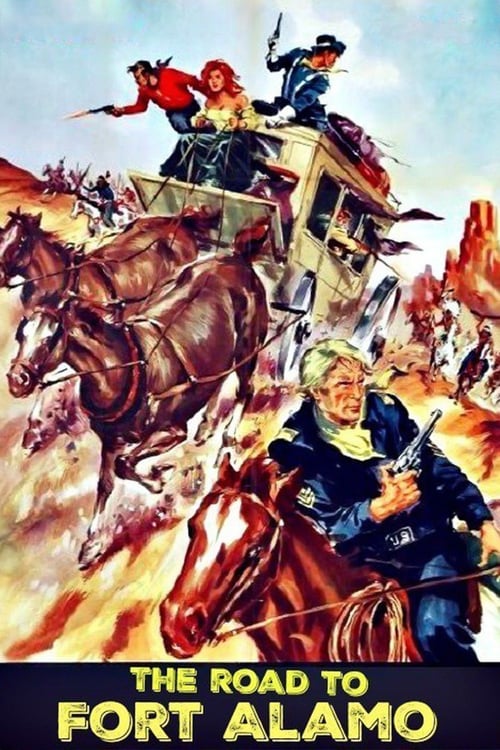
The Road to Fort Alamo
1964
No user ratings available yet
Diversity score: 3.0 out of 10

1968
M/PGDirector
Giorgio Capitani
Runtime
100 minutes
Average Rating
No ratings yetSynopsis
After years of hard work, old Sam Cooper has finally found a gold mine. Since he cannot take everything he has found with him, he blows up the entrance. To help him exploit his discovery, he calls on his godson Manolo Sanchez. But Manolo is accompanied by "the blond," a strange man who seems to dominate him. Sam has no choice but to accept his company. He persuades his old friend Mason to travel with them as well. Greed and paranoia will eventually completely destroy the small band.
Overall Score
Limited
Category Breakdown
LGBTQ+ Representation
The film lacks explicit evidence of non-cisnormative identities or same-sex intimacy. The relationship between Manolo and 'the blond' is framed through masculine dominance, fitting standard genre archetypes.
Gender Representation
The story centers almost exclusively on a male ensemble, including Sam Cooper and Mason. This absence of female characters reinforces traditional masculine hierarchies within the narrative.
Racial & Ethnic Diversity
A blend of Anglo-Saxon and Hispanic identities is suggested through names like Sam Cooper and Manolo Sanchez. However, ethnic variety serves the genre rather than centering specific non-white perspectives.
Religious & Cultural Diversity
The film follows Western genre conventions, focusing on individualist pursuits and frontier justice. It functions as a moralistic cautionary tale about greed rather than a systemic critique.
Disability Representation
There are no visible or invisible disabilities mentioned or depicted among the characters in the provided synopsis.
Strengths
Areas for Improvement
AI Analysis
The Ruthless Four is a conventional Western that relies heavily on established genre tropes. The narrative focuses on a small, male-dominated group driven by greed and paranoia, which limits the scope of its social representation. While the cast includes a mix of Anglo-Saxon and Hispanic names, the film does not use these identities to explore deep cultural agency. Instead, the characters serve a standard plot about individual flaws. Ultimately, the film lacks intersectional complexity. It adheres to traditional masculine dynamics and avoids subverting the historical hierarchies typical of the 1960s Western.
1964
1971
1971
1970
1972
1967
1970
1968
1968
1970
1966
1965
No reviews yet. Be the first to share your thoughts on this movie!
Use the rating form above to leave a star rating and optional review.