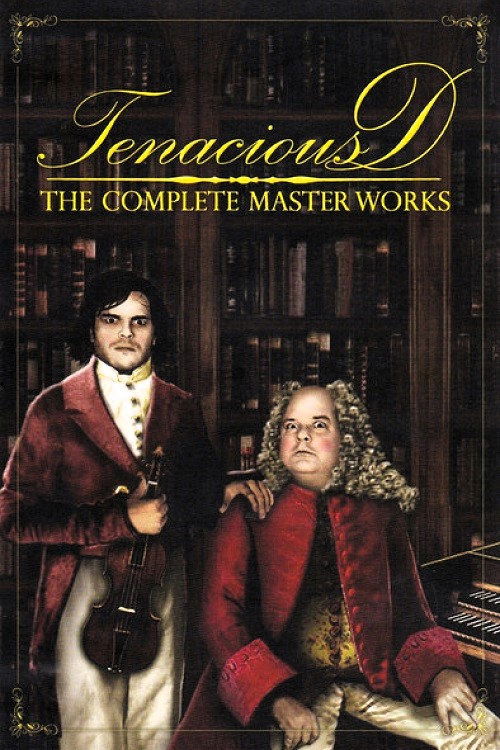
Tenacious D: The Complete Masterworks
2003
No user ratings available yet
Diversity score: 3.7 out of 10

1982
Director
Clark Santee, Frank Zappa, Dick Darley
Runtime
92 minutes
Average Rating
No ratings yetSynopsis
Produced by Frank Zappa in 1982, The Dub Room Special combines footage from a performance at the KCET studios in Los Angeles on August 27, 1974, a concert performed at The Palladium, NYC on October 31, 1981, some clay animation by Bruce Bickford, and several interviews. Previously only available through mail-order, it was made widely available on DVD on October 17, 2005.
Overall Score
Fair
Category Breakdown
LGBTQ+ Representation
The film lacks explicit narratives or character arcs centered on LGBTQ+ identities. While the avant-garde performance challenges heteronormative structures, there is no documented evidence of specific queer identities or same-sex intimacy.
Gender Representation
The production centers on a male-dominated jazz-rock ensemble environment. It lacks agency-driven female roles or subversions of masculinity, focusing instead on instrumental mastery rather than gendered social dynamics.
Racial & Ethnic Diversity
The ensemble reflects racial diversity typical of professional jazz and fusion musicians of the era. It presents a multi-ethnic musical collective without using race as a central narrative driver.
Religious & Cultural Diversity
Zappa’s artistic framework deconstructs traditional Western institutions through satire. The film critiques mainstream American consumerism and uses surrealist animation to prioritize individual expression over established social or religious moralities.
Disability Representation
There are no visible or central depictions of physical or neurodivergent disabilities. These elements do not serve as significant thematic components within the performance footage.
Strengths
Areas for Improvement
AI Analysis
The film is a postmodern assemblage that prioritizes technical musical virtuosity and satirical commentary over structured character arcs. It functions more as a medium for avant-garde experimentation than a vehicle for identity-driven storytelling. While the work lacks explicit representation of LGBTQ+ or gendered social dynamics, it achieves a moderate score through its inherent rejection of traditional social structures. The musical collective presents a multi-ethnic professional environment typical of the jazz-fusion era. Ultimately, the film's strength lies in its cultural critique. By utilizing genre-bending compositions and surrealist animation, it challenges mainstream American consumerism and conventional social norms.
2003
2012
2018
2011
1981

1994
No reviews yet. Be the first to share your thoughts on this movie!
Use the rating form above to leave a star rating and optional review.