
Sarocharu
2012
No user ratings available yet
Representation score: 3.0 out of 10
Representation Score
Fair
2010
Director
Yogaraj Bhat
Runtime
123 minutes
Average Rating
No ratings yetNew Showbiz Analysis
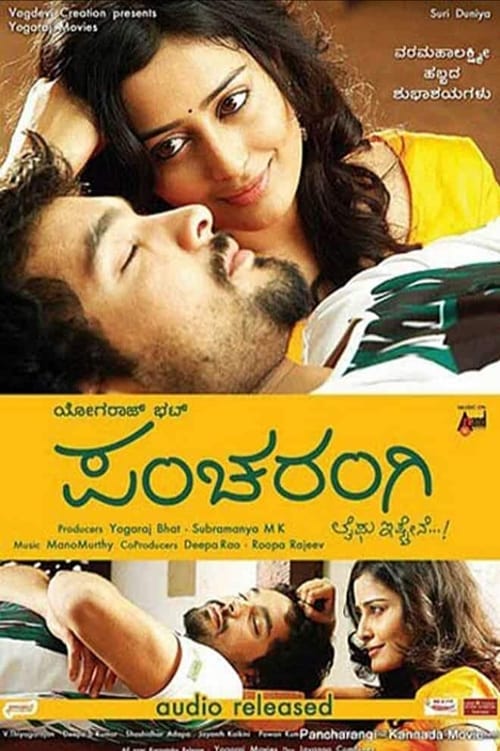
Pancharangi is a character-driven drama that finds its progressive edge through the subversion of traditional gender roles. The film moves away from rigid melodrama to focus on quirky, individualistic personality types. While the narrative disrupts the cliché of the passive female lead through Ambika's assertiveness, it remains rooted in traditional social and familial structures. The film prioritizes social cohesion over radical systemic critique. Ultimately, the work offers meaningful character development within a culturally specific framework, though it lacks engagement with broader identity politics or diverse representation beyond its regional setting.
Category Breakdown
The film centers around heterosexual relationships and traditional courtship. It does not include characters with non-binary gender identities or stories that challenge the assumption that everyone is straight or cisgender.
Ambika's character challenges traditional gender roles through her tomboyish nature. She plays a significant role in driving the story by confronting the protagonist to express her feelings.
The cast is made up of actors representing a specific regional context in Karnataka. This localized approach avoids Western-centric casting to maintain an authentic South Indian social landscape.
The story unfolds within traditional family structures and social customs related to arranged marriages. It explores the tension between individualistic ideas and the collective needs of the family unit.
There are no visible or invisible disabilities portrayed as central to the narrative or character development.
Present on Screen
Limited or Absent
Official Synopsis
A family goes to a village near Mangalore to finalize a bride for the elder son, Lucky, played by Pavan Kumar. Lucky is a US-based software professional, and is a teetotaler, always abiding by the pressure and demands of his parents, so much to the fact that he does not have the courage to speak out that he already has a girlfriend. Bharath Kumar, the youngest son, the character played by Diganth, is a carefree individual with weird ideas on life. Bharath meets a tomboyish girl, Ambika, who is the house-owner's niece, and they begin to mingle well due to the nature of their personalities. However, following a few unusual twists and turns, the alliance is called off and the groom's family members walk out due to embarrassment. Ambika, who has now developed a strong feeling of love towards Bharath, goes ahead and confronts him. And finally, Bharath too says yes.
2012

2011
2005
2014

2012

2022

2011
1991
No reviews yet. Be the first to share your thoughts on this movie!
Use the rating form above to leave a star rating and optional review.