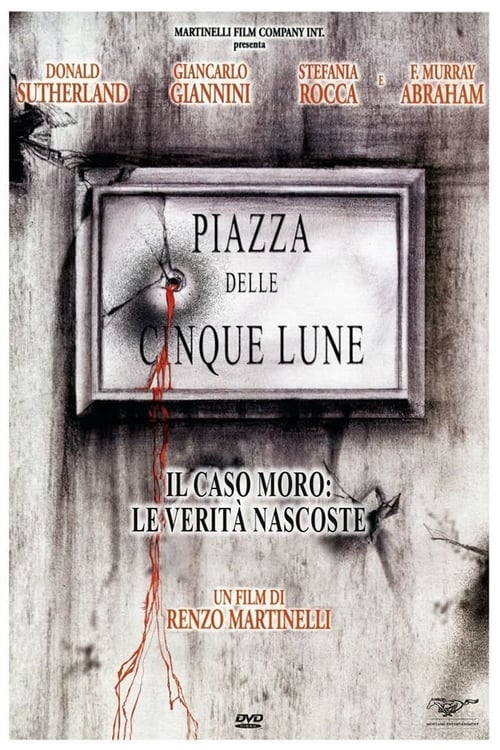
Five Moons Plaza
2003
No user ratings available yet
Diversity score: 3.8 out of 10

2016
Director
Roberto Faenza
Runtime
94 minutes
Average Rating
No ratings yetSynopsis
In 1983 an English journalist travels to Italy to investigate the mysterious disappearance of a young vatican girl.
Overall Score
Good
Category Breakdown
LGBTQ+ Representation
The film centers on the lived experience of Pier Paolo Pasolini, making his identity a primary lens for exploring social friction. Same-sex intimacy is a central component of his agency rather than a peripheral element.
Gender Representation
The narrative disrupts traditional hierarchies by focusing on a male protagonist who derives power from intellectual subversion. While male-centric, it challenges patriarchal stability by portraying the lead as a disruptive, marginalized force.
Racial & Ethnic Diversity
Set in 1970s Italy, the film focuses on internal class and ideological divisions. It lacks significant racial diversity in the primary cast, prioritizing the socioeconomic layers of the Italian landscape.
Religious & Cultural Diversity
The story engages deeply with critiques of the Catholic Church and capitalist consumerism. It frames the protagonist's defiance of religious and political authority as a vital pursuit of intellectual liberation.
Disability Representation
Representation in this category remains neutral. Character arcs are driven by ideological and sexual identity rather than physical or neurodivergent conditions.
Strengths
Areas for Improvement
AI Analysis
Roberto Faenza’s biographical study succeeds by centering a figure who actively challenged the religious, political, and economic foundations of his era. The film excels in its sophisticated exploration of the friction between marginalized identities and dominant systemic powers. Its primary strength is the authentic portrayal of queer identity as a central driver of the narrative. By framing Pasolini's life against a conservative backdrop, the film provides a meaningful critique of heteronormative structures. However, the film remains limited by its narrow focus on the Italian socio-political landscape of the 1970s. This focus results in a lack of racial and ethnic diversity within the primary cast.
No reviews yet. Be the first to share your thoughts on this movie!
Use the rating form above to leave a star rating and optional review.