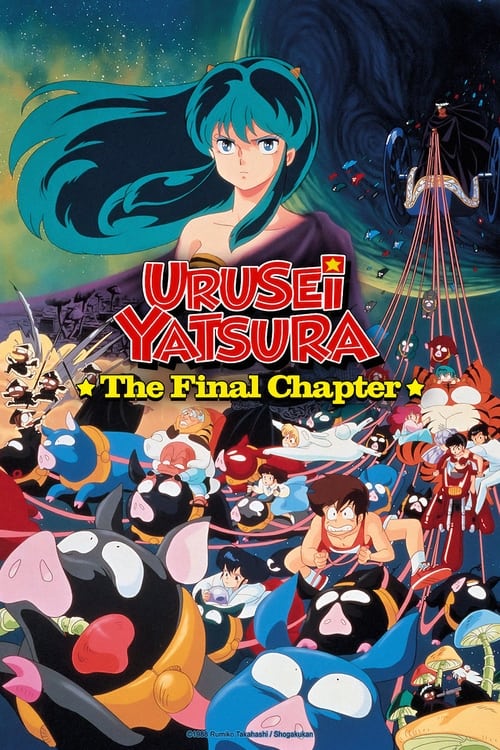
Urusei Yatsura: The Final Chapter
1988
No user ratings available yet
Diversity score: 4.6 out of 10
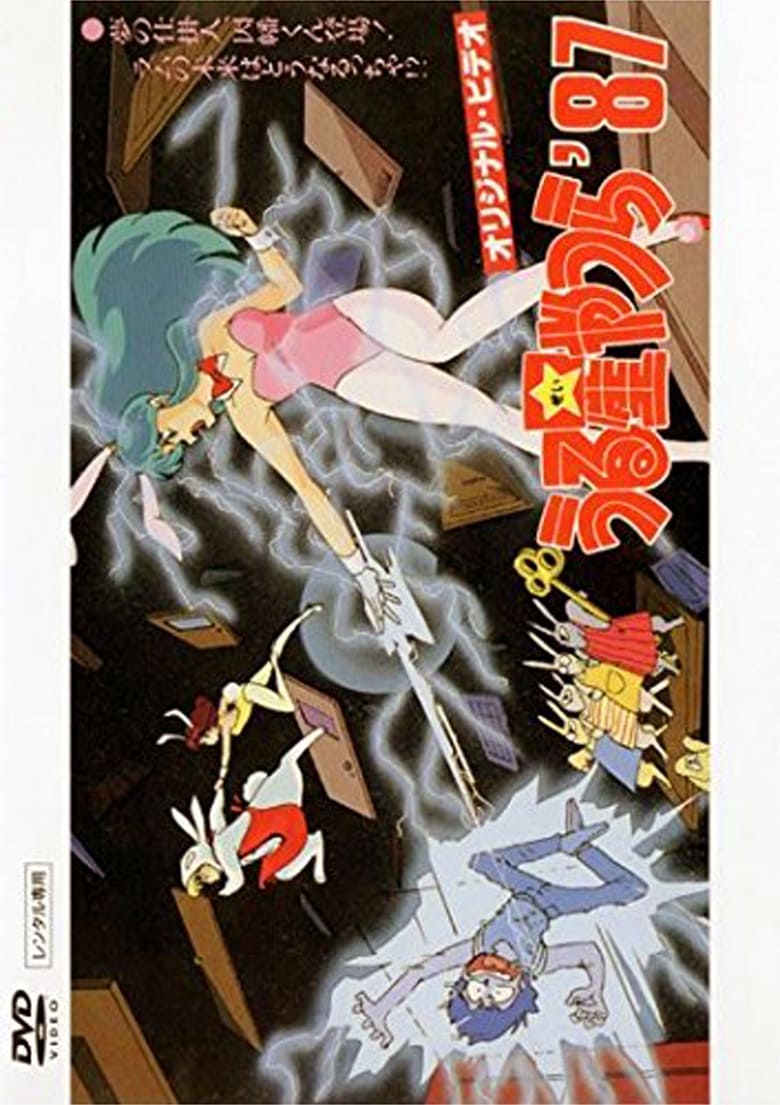
1987
Director
Satoshi Dezaki
Runtime
57 minutes
Average Rating
No ratings yetSynopsis
It is summertime, and Shinobu laments not having a boyfriend. She then happens upon a young man weak from hunger, and wearing a rabbit costume. She gives him a carrot, he expresses his gratitude by hitting on her... and she hits back. The young man leaves behind a key to another dimension where everybody's possible futures exist. Lum and Ataru join Shinobu to find the bunny boy, and happy futures for themselves.
Overall Score
Limited
Category Breakdown
LGBTQ+ Representation
The film lacks explicit LGBTQ+ characters or non-cisnormative identities. Romantic tension focuses on heteronormative comedic friction between male and female leads. Speculative elements regarding possible futures do not address queer identities.
Gender Representation
Female characters like Lum and Shinobu display significant agency through decisive action and physical force. Masculinity is often portrayed as inept or driven by base impulses, disrupting traditional leader archetypes through slapstick.
Racial & Ethnic Diversity
The production is culturally homogeneous, reflecting its Japanese origins and 1980s animation standards. The cast and setting are primarily Japanese, with no use of non-human species as metaphors for ethnic diversity.
Religious & Cultural Diversity
The narrative prioritizes subjective experience and postmodern absurdity through its exploration of possible futures. It functions as a character-driven fantasy rather than a critique of Western institutions like religion or the nuclear family.
Disability Representation
There is no visible or invisible disability representation in the film. Characters are defined by archetypal roles within a dream-logic setting rather than by physical or neurodivergent traits.
Strengths
Areas for Improvement
AI Analysis
The film operates as a surrealist comedy rooted in the tropes of its era. While it subverts traditional masculine competence by portraying male characters as inept, these shifts serve comedic hyperbole rather than systemic critique. Representation is largely limited to a culturally homogeneous Japanese context. The narrative focuses on individualistic pursuits and slapstick dynamics, lacking the intersectional complexity or intentional social commentary required for a higher diversity rating. Ultimately, the work remains a genre-specific fantasy. It explores personal agency and speculative futures without engaging in broader social or political deconstruction.
No reviews yet. Be the first to share your thoughts on this movie!
Use the rating form above to leave a star rating and optional review.