
Onyx
2015
No user ratings available yet
Representation score: 4.5 out of 10
Representation Score
Minimal
2026
13+Director
Néstor Orozco
Runtime
30 minutes
Average Rating
No ratings yetNew Showbiz Analysis
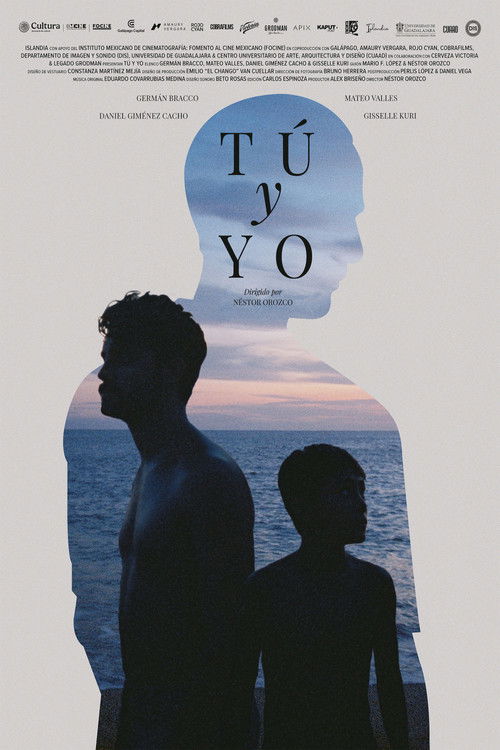
The film opens with a fishing trip that is less about fish and more about the weight of a missing man. Néstor Orozco’s Tú y Yo (2026) sells a specific kind of masculine closure: the idea that a father’s lies are forgivable if he finally shows up to drive his sons. The camera loves the older brother, Tomás, who has quietly become the father his own father failed to be. This dynamic is the film’s true engine, yet the narrative insists on restoring the biological patriarch to the center of the moral map. The sold meaning is clear: family is a hierarchy that must be repaired, not dismantled. The father is not punished for his absences; he is invited back into the circle. The brothers’ journey is a ritual of acceptance, where the younger brother, Octavio, learns to love the man who was never there, and the older brother accepts that his surrogate role was temporary. The ending does not challenge the father’s authority but reaffirms it, suggesting that blood ties override the emotional labor of substitution. This is a conservative drama that treats traditional family structures as the only viable container for grief. It does not critique the patriarchal model of fatherhood but mourns its failures while ultimately validating its necessity. The last image is one of reconciliation, not revolution. The film argues that forgiveness is the highest form of love, even when that love has been withheld for years. It is a quiet, melancholic affirmation of the status quo, where the father’s return is the only acceptable ending.
Category Breakdown
No queer characters, intimacy, or identity markers appear. The cast and synopsis focus exclusively on heterosexual male sibling dynamics and a father-son bond.
The narrative centers on three men: two brothers and their father. Women appear only as voices or are absent from physical action, treating the family unit as a strictly patriarchal structure.
The cast is explicitly Mexican, with actors like Germán Bracco and Daniel Giménez Cacho anchoring the film. The setting is rooted in Mexican family dynamics, avoiding whitewashing.
The film treats the traditional Mexican father figure as the source of both pain and necessary reconciliation. It validates the family unit and the father’s authority as the ultimate moral anchor.
No characters are depicted with physical, mental, or sensory disabilities. The conflicts are purely emotional and relational, involving no impairment, diagnosis, or neurodivergence.
Present on Screen
Limited or Absent
Official Synopsis
Tomás is a young man who watches his absent father repeat, with his younger brother Octavio, the same patterns and lies he once used with him. To make up for missing Octavio’s birthday, their father invites him on a fishing trip and asks Tomás to drive him halfway. What begins as a simple half-day errand turns into a revealing journey, where the brothers must come to terms with the fact that their experiences with their father will never return, while Tomás realizes that, for a long time, he has been the closest thing to a true father for Octavio.
2015

2008

2019

1997

2012

1989
2005
2017
No reviews yet. Be the first to share your thoughts on this movie!
Use the rating form above to leave a star rating and optional review.