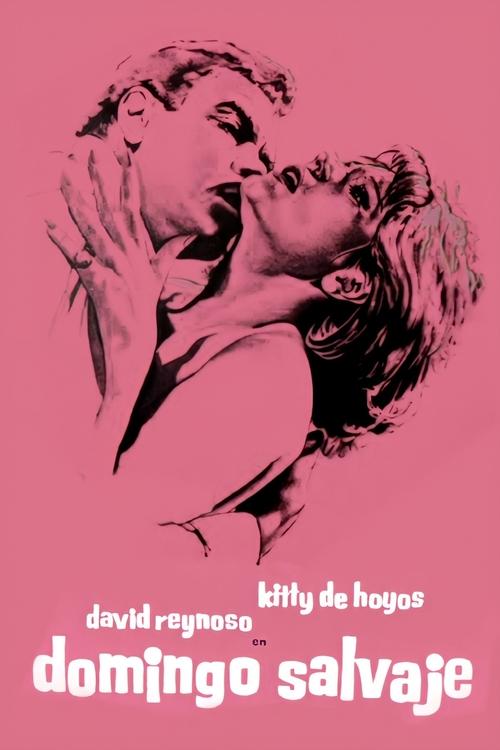
Savage Sunday
1967
No user ratings available yet
Representation score: 3.4 out of 10

Representation Score
Fair
1978
Director
Bigas Luna
Runtime
93 minutes
Average Rating
No ratings yetNew Showbiz Analysis
Bilbao is a psychological thriller that adheres to traditional dramatic frameworks. While Bigas Luna is known for challenging social norms, this particular narrative relies on established clichés of obsession and victimization. The film's focus on a singular, dark relationship limits its multi-layered depth. It primarily serves as a character study of a disturbed individual rather than a work designed for diverse representation. Ultimately, the film reflects the era's tendency to use psychological instability and gendered power imbalances as central plot drivers without offering broader social or cultural breadth.
Category Breakdown
The film does not include any explicit LGBTQ+ characters or narratives that challenge straight-centered assumptions. The plot revolves around a single, intense heterosexual relationship between the protagonist and a dancer.
The story emphasizes a power imbalance where a male character dominates a female character. It adheres to traditional themes of male obsession without challenging gender hierarchies.
The production seems to depict a localized Spanish narrative within a relatively homogeneous cultural setting. There is no indication of a multi-ethnic cast or intentional racial diversity.
By focusing on a troubled individual and the margins of society, the film may subtly critique social stability. However, it does not explore broader systemic or anti-capitalist issues.
The protagonist is portrayed as psychologically unstable, which might risk using mental health conditions merely as a plot device rather than a nuanced exploration of neurodivergence.
Present on Screen
Limited or Absent
Official Synopsis
A disturbed middle-aged man is obsessed by a dancer and prostitute and abducts her, with tragic consequences.
1967
1986
1994

1964
1989
1976

1976
1971
No reviews yet. Be the first to share your thoughts on this movie!
Use the rating form above to leave a star rating and optional review.