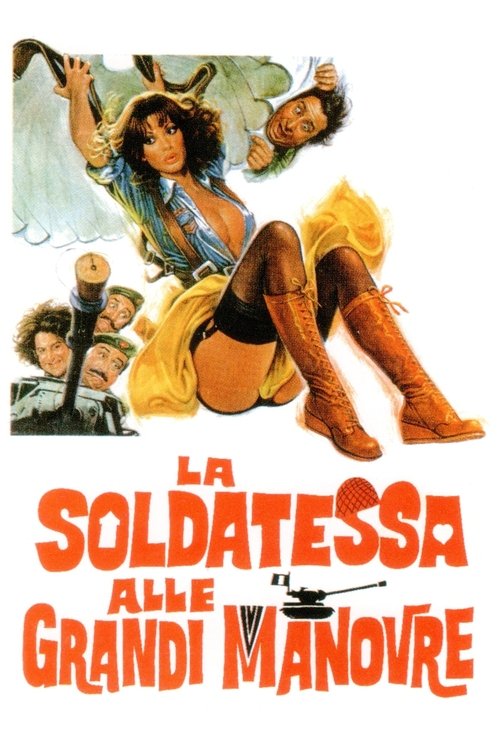
The Soldier with Great Maneuvers
1978
No user ratings available yet
Diversity score: 3.8 out of 10

1989
Not RatedDirector
Anson Williams
Runtime
100 minutes
Average Rating
No ratings yetSynopsis
An overprotective single mother tries to stop her son joining the parachute unit by sending him to the college, fearful that he may end up his life like his father did. He secretly leaves the college and joins the army, but the mother finds out and makes a bet with him that if she passes the basic training, he will leave the unit.
Overall Score
Limited
Category Breakdown
LGBTQ+ Representation
The film focuses on a traditional maternal-filial conflict. There is no evidence of non-cisnormative gender identities or narratives that critique heteronormativity.
Gender Representation
The narrative subverts gender hierarchies by featuring a mother who enters basic training. This shifts the protagonist from a passive maternal role to one of active, physical agency.
Racial & Ethnic Diversity
The cast includes Héctor Elizondo, providing ethnic diversity. However, the story focuses on a singular family unit without exploring intersectional identities or systemic racial discourse.
Religious & Cultural Diversity
The film follows traditional Western storytelling structures. It centers on the tension between parental protection and individual autonomy within a standard nuclear family setting.
Disability Representation
There are no visible or invisible disabilities portrayed as central to the narrative arc.
Strengths
Areas for Improvement
AI Analysis
This comedy operates within a conventional late-80s television framework, prioritizing domestic character struggles over systemic social critique. While it lacks queer themes or radical deconstructions of hierarchy, it offers a meaningful departure from the 'fragile matriarch' trope. The film's strength lies in its subversion of gendered expectations, placing a female lead in a high-agency, physically demanding role. However, the narrative remains largely tethered to traditional Western structures and nuclear family dynamics. Overall, the representation is moderate. It provides ethnic inclusion through its cast but does not center broader discussions regarding race or intersectionality.
1978
1979
1963

2020

2012
1984

2015

1973
1978

2020
1975

1986
No reviews yet. Be the first to share your thoughts on this movie!
Use the rating form above to leave a star rating and optional review.