Virile Games
1988
No user ratings available yet
Representation score: 7.5 out of 10
Representation Score
Good
1996
Director
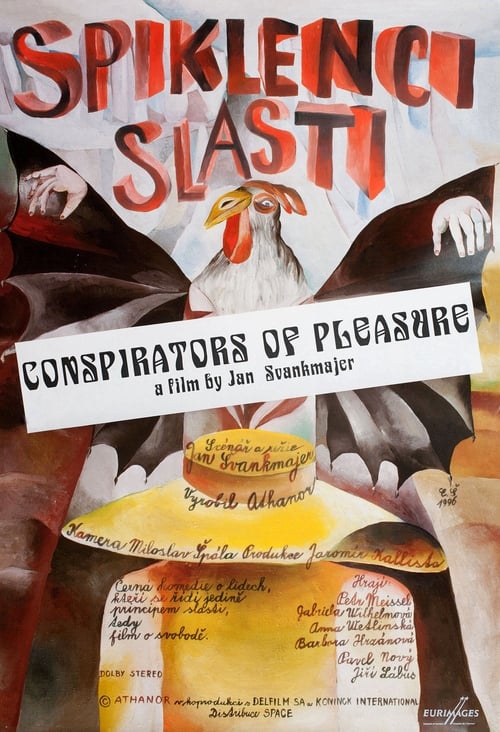
Jan Švankmajer
Runtime
83 minutes
Average Rating
No ratings yetNew Showbiz Analysis
Jan Švankmajer’s work excels at dismantling traditional social hierarchies through surrealist storytelling. By focusing on the idiosyncratic rituals of Prague residents, the film challenges gendered expectations and conventional morality. However, the film is limited by its narrow geographic and demographic scope. The focus on a specific Central European micro-community results in a lack of racial and ethnic variety. Ultimately, the film's strength lies in its psychological depth. It replaces standard social cohesion with a celebration of the bizarre, making it a powerful critique of the 'normal' world.
Category Breakdown
The film avoids typical romantic clichés and focuses on fetishistic rituals. Mrs. Loubalova’s dominatrix persona challenges traditional views of femininity. It explores unconventional sexualities through a surreal perspective.
Women are shown as leaders of aggressive, unusual actions rather than passive figures. Characters like Mrs. Loubalova and Mrs. Malkova challenge the traditional homemaker stereotype through their independence.
The film centers on Prague residents, suggesting a homogeneous social environment typical of mid-90s Central European cinema with no evidence of diverse casting.
The narrative deconstructs social norms by emphasizing irrational, private morality over civic ideals. It criticizes organized society by presenting eccentric, antisocial behaviors as sacred, personal truths.
Characters’ obsessive behaviors, such as ritualistic cleaning, suggest a study of neurodivergence. However, these traits are explored through dark comedy rather than a direct look at disability rights.
Present on Screen
Limited or Absent
Official Synopsis
Six Prague residents pursue bizarre rituals. Mr. Peony builds a chicken costume to wear while enacting homicidal fantasies toward neighbor Mrs. Loubalova, who does the same dressed as a dominatrix. Their mail carrier, Mrs. Malkova, inhales tiny balls of bread. Newsstand operator Mr. Kula obsessively watches the broadcasts of news anchor Mrs. Beltinska, whose husband regularly scrubs his body.
1988
2006
1993
2015
1998
1977

1968

2014
No reviews yet. Be the first to share your thoughts on this movie!
Use the rating form above to leave a star rating and optional review.