
Mulla
2008
No user ratings available yet
Representation score: 4.2 out of 10
Representation Score
Minimal
2026
NRDirector
Balaji Tharaneetharan
Runtime
159 minutes
Average Rating
No ratings yetNew Showbiz Analysis
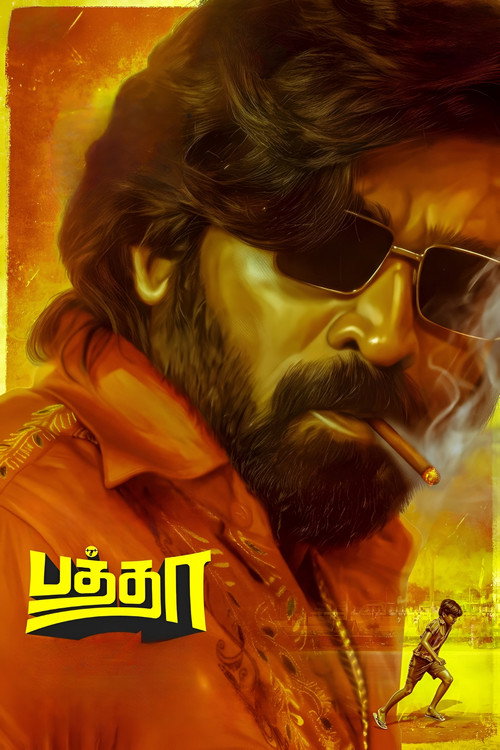
Baththa opens with a high-energy display of brute force, establishing Vijay Sethupathi’s character as a local enforcer whose reputation precedes him. The film’s argument is that personal codes of honor and community loyalty are superior to the inefficiency of the state. This is tested against the internal logic of a story that relies on the protagonist’s violence to resolve conflicts, suggesting that individual action is the only effective response to social problems. The ending rewards the protagonist’s adherence to his personal code, reinforcing his status as the unyielding local authority. The camera loves the protagonist, giving him beauty lighting and slow-motion walks, while the police and politicians are treated as hollow or comically inept. The film prints the legend of the "local king," destroying the myth of the impartial state and replacing it with the myth of the benevolent tyrant. The sold meaning is that the protagonist’s personal code is the only thing that matters, and his violence is normal, a joke, or cost-free. The last image centers on the protagonist in a moment of quiet reflection, reinforcing his status as the unyielding local authority. The film’s argument is thin, relying on the protagonist’s personal code to resolve complex social issues, but it is entertaining on its own terms as a "masala" structure where social issues are secondary to the protagonist’s personal code of honor.
Category Breakdown
Absent. The 1986 Madras setting and the focus on a male gangster and a young boy leave no room for queer identity or same-sex intimacy. No characters are coded or billed as LGBTQ+.
Limited. Lijomol Jose and Santhy Balachandran occupy traditional supporting roles as the romantic interest and the matriarch, respectively. The narrative centers on the male bond between the gangster and the boy, with women serving as emotional anchors rather than active agents.
Limited. The cast is predominantly South Asian, reflecting the Tamil setting. Diversity is internal to the region, with no significant representation of other ethnic groups or racial dynamics explored on screen.
Present. The film treats the 1986 Madras community as a warm, authentic space where personal codes of honor override institutional law. It challenges the state’s authority by validating the gangster’s vulnerability and the boy’s moral influence as a higher form of justice.
Absent. No characters are depicted with physical, sensory, or cognitive disabilities. The narrative focuses on psychological vulnerability and social status rather than impairment.
Present on Screen
Limited or Absent
Official Synopsis
In 1986 Madras, a timid eight-year-old boy accidentally traps a feared gangster inside a deserted school toilet. As the gangster is forced to confront hunger, loneliness and his own vulnerability, an unlikely bond begins to grow between the two, changing their lives forever.
2008
2018

2016
2010

2018
2019

2019
2014
No reviews yet. Be the first to share your thoughts on this movie!
Use the rating form above to leave a star rating and optional review.