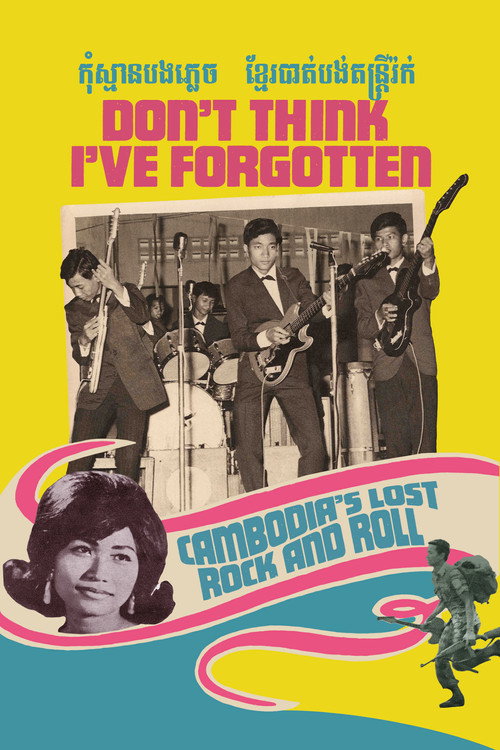
Don't Think I've Forgotten: Cambodia's Lost Rock and Roll
2014
No user ratings available yet
Representation score: 4.8 out of 10
Representation Score
Good
1999
Director
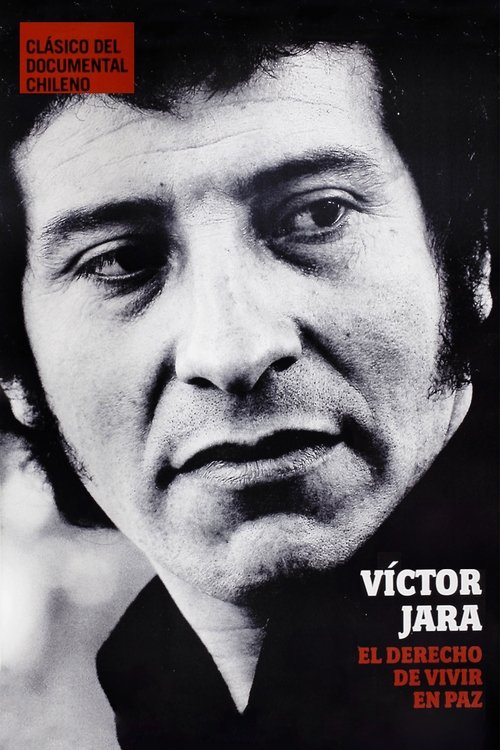
Carmen Luz Parot
Runtime
100 minutes
Average Rating
No ratings yetNew Showbiz Analysis
The documentary serves as a powerful tool of historical resistance, using the life of Victor Jara to deconstruct state-sponsored oppression. It succeeds by elevating Latin American identity and critiquing the rigid, hyper-masculine structures of the Chilean dictatorship. The film excels in cultural representation, framing art as a mechanism for social justice. It moves beyond a simple biography to explore how underrepresented groups resist systemic corruption and authoritarianism. However, the focus remains heavily on political and musical legacy. This narrow lens limits the explicit exploration of specific identity markers like LGBTQ+ representation or disability.
Category Breakdown
The film explores the social dynamics of Chile under repression. While LGBTQ+ identities are not the main focus, the narrative provides a platform for understanding the struggles of underrepresented communities.
The documentary challenges the hyper-masculine military archetype by highlighting Jara's vulnerability. It disrupts traditional hierarchies through his role as a cultural catalyst rather than a conventional political leader.
The film offers a profound exploration of Latin American identity. It frames Chilean cultural and ethnic identity as a primary site of resistance against systemic, Western-aligned oppression.
The narrative prioritizes social justice and collective identity over state-centric morality. It critiques Western-aligned institutions and portrays the military dictatorship as inherently corrupt and oppressive.
There is no evidence within the film to evaluate the representation of physical or neurodivergent disabilities.
Present on Screen
Limited or Absent
Official Synopsis
A moving portrait of Chilean singer-songwriter and political activist Victor Jara (1932-73) that chronicles the life of the talented artist who was imprisoned, tortured and machine-gunned by the country's dictatorship.
2014
2012
2017
1975
2020
2021
2018
1982
No reviews yet. Be the first to share your thoughts on this movie!
Use the rating form above to leave a star rating and optional review.