Christina
1974
No user ratings available yet
Diversity score: 3.4 out of 10
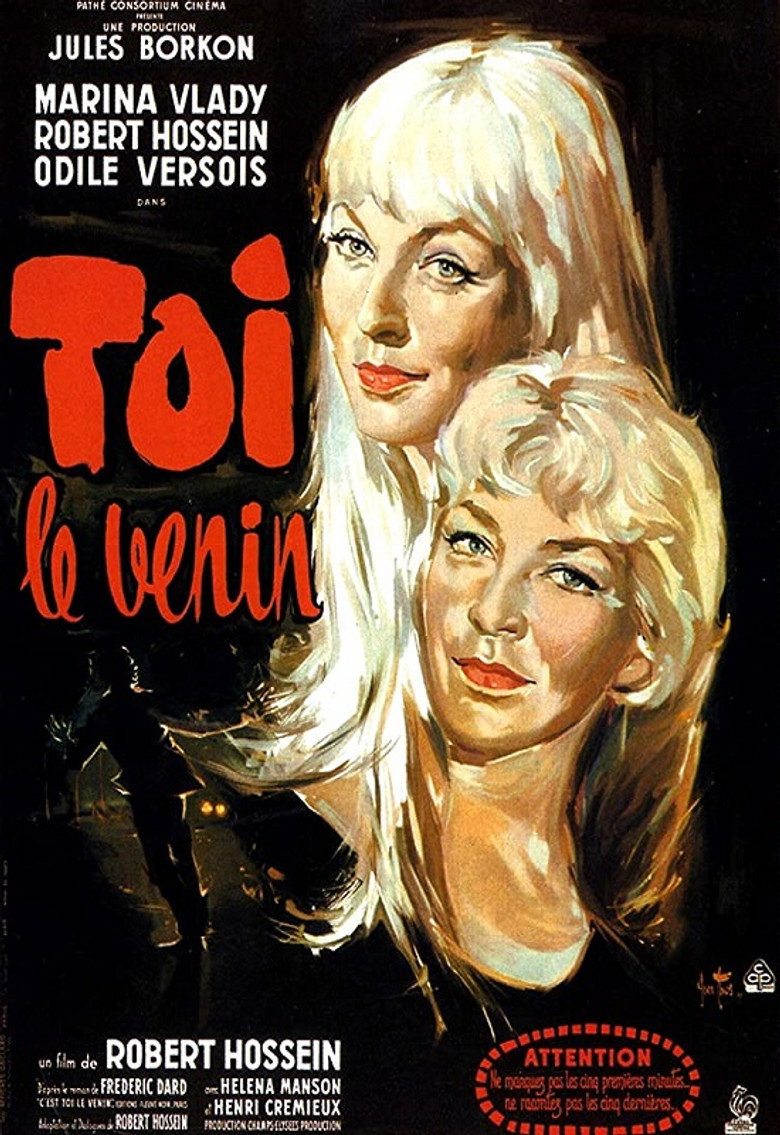
1959
Director
Robert Hossein
Runtime
92 minutes
Average Rating
No ratings yetSynopsis
Picked up by a beautiful motorist, jobless hitchhiker Pierre (Hossein) is subsequently romanced by the girl. Immediately thereafter, however, she dumps him, attempting to run him over as a final insult. Memorizing her license number, Pierre pursues the enigmatic motorist. Arriving at her home, Pierre is met by two young ladies (Marina Vlady and Odelle Versois), either one of whom might be the woman he's looking for.
Overall Score
Fair
Category Breakdown
LGBTQ+ Representation
The film lacks explicit LGBTQ+ characters or non-heteronormative identities. The narrative focuses on transient, fleeting heterosexual encounters instead.
Gender Representation
The film disrupts mid-century norms by centering a female protagonist with high sexual and social autonomy. She refuses traditional romantic or matrimonial structures, presenting femininity as unpredictable agency.
Racial & Ethnic Diversity
The cast and social environment appear homogeneous, reflecting a traditional Western demographic framework. There is no evidence of racial blending or non-white casting.
Religious & Cultural Diversity
The narrative prioritizes existentialist themes and subjective morality over institutionalized ethics. It avoids promoting singular religious or traditional moralities through its depiction of social detachment.
Disability Representation
There are no visible or invisible disabilities portrayed as central to the narrative or character development.
Strengths
Areas for Improvement
AI Analysis
Blonde in a White Car is a character study that trades demographic breadth for psychological and social subversion. While it fails to provide representation for racial or LGBTQ+ identities, it succeeds in challenging the rigid social hierarchies of the 1950s. The film's strength lies in its progressive treatment of gender and morality. By replacing stable, institutionalized values with existentialist subjectivity, the story offers a sophisticated critique of conventional domesticity and social cohesion. Ultimately, the work functions as a non-conformist piece of auteur cinema. It prioritizes individualistic perspectives and the deconstruction of traditional roles over the inclusive casting typical of modern productions.
1974

1963

1945

1960

1964
1985

1967
1998

1973
1988
1970

1968
No reviews yet. Be the first to share your thoughts on this movie!
Use the rating form above to leave a star rating and optional review.