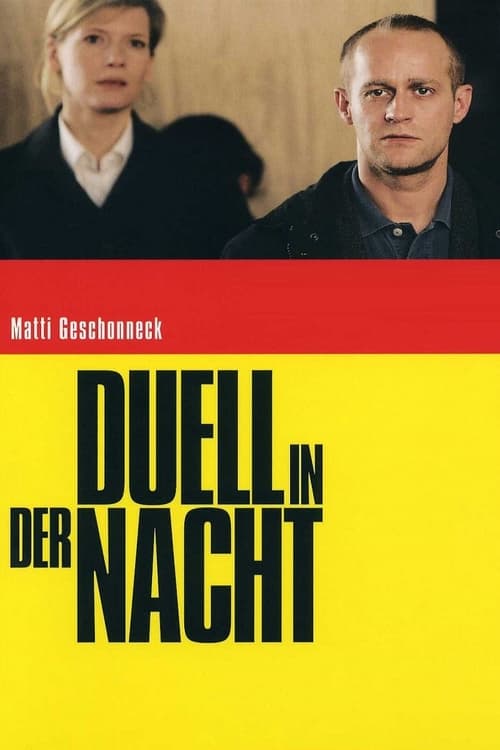
Duel at Night
2007
No user ratings available yet
Representation score: 4.5 out of 10

Representation Score
Limited
2012
Director
Matti Geschonneck
Runtime
88 minutes
Average Rating
No ratings yetNew Showbiz Analysis
Das Ende einer Nacht is a psychological legal thriller that emphasizes a critique of systems over demographic diversity. The film's strength lies in its subversion of traditional gender roles, placing women in positions of significant intellectual and institutional power. However, the narrative lacks depth in terms of race and ethnicity, presenting a very homogeneous cast. It also fails to address LGBTQ+ identities or non-straight-centered narratives. Ultimately, the film excels as a study of power dynamics and the fallibility of justice, though it remains narrow in its portrayal of human experience.
Category Breakdown
The film centers on a domestic violence case within a heterosexual context. There are no LGBTQ+ characters or stories addressing non-straight relationships.
Women play key roles in driving the narrative through their high institutional authority. The story builds tension around the intellectual and procedural battles between the judge and the defense attorney.
The cast appears uniform, reflecting a traditional European social environment. It lacks the diversity needed for a higher score, particularly in terms of race and ethnicity.
The story questions the stability of Western institutions by showing the legal system as a place where truth can be manipulated. It challenges the perceived stability of social hierarchies.
There are no characters dealing with physical, sensory, or neurodivergent disabilities in the film.
Present on Screen
Limited or Absent
Official Synopsis
Judge Katarina Weiss must decide whether the allegations against millionaire businessman Werner Lamberg—that he beat and raped his wife, Sandra—are valid or not. In court, Katarina faces a defense attorney Eva Hartmann who actually manages to refute all charges to such an extent that she secures her client’s provisional release from custody.
2007

2007
2000

2005

2018

2020

2018

2016
No reviews yet. Be the first to share your thoughts on this movie!
Use the rating form above to leave a star rating and optional review.