
Backflip!! The Movie
2022
No user ratings available yet
Representation score: 4.1 out of 10
Representation Score
Good
2021
Director
Shinya Watada
Runtime
109 minutes
Average Rating
No ratings yetNew Showbiz Analysis
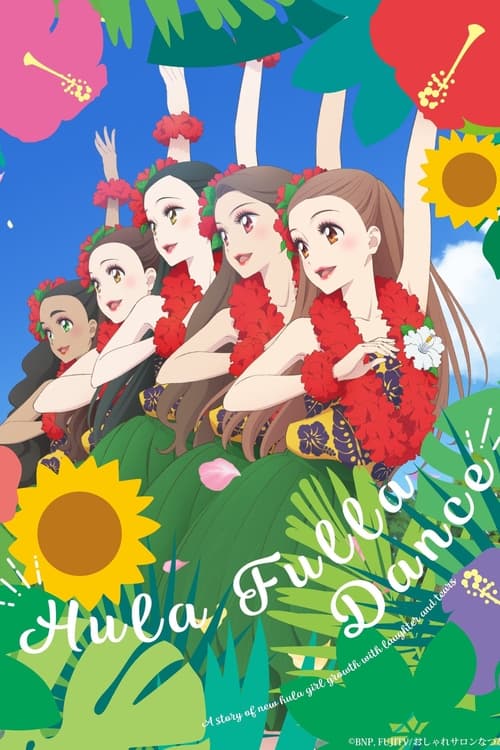
Hula Fulla Dance is a character-driven ensemble piece that centers on female-driven narratives. It explores the blend of Japanese regional identity and Hawaiian cultural expression through professional performance. The film successfully highlights women's ability to drive the story and resilience, providing a nuanced look at group dynamics. However, it lacks explicit representation of LGBTQ+ identities or disability ability to act. Cultural elements serve more as an aesthetic bridge between traditions rather than a deep exploration of systemic diversity.
Category Breakdown
The story focuses on the emotional connections and community support among a group of women. Although no non-traditional gender identities are explicitly mentioned, the strong bonds between the characters hint at a story that could be interpreted as supportive of LGBTQ+ themes.
The film highlights the professional and personal growth of young women. It portrays them as the main drivers of their lives, emphasizing their competence and resilience in the face of traditional patriarchal structures.
The story incorporates Hawaiian hula traditions into a Japanese setting. Despite the cast being ethnically uniform, the characters engage with a non-Japanese heritage through their performances.
Set in Fukushima, the film emphasizes regional identity and recovery. It finds meaning in local industry and community efforts without directly critiquing traditional institutions.
There is no explicit mention of neurodivergence or physical disabilities. However, the characters' varying personalities and initial struggles may suggest diverse social approaches, though these remain typical character archetypes.
Present on Screen
Limited or Absent
Official Synopsis
Hiwa Natsunagi is a high school student living in Iwaki City, Fukushima Prefecture. Worried about what to do with her life after graduation, she spots a poster for Spa Resort Hawaiians the “Hawaii of Tohoku” the place where her sister Mari used to work and applies to their new dancer (hula girl) campaign on a whim. Despite her lack of experience, Hiwa is accepted for the job, and starts on the path towards becoming a Hula Girl with her classmates, Kanna, Ranko, 'ohana and Shion. However, unable to keep in step with one another due to their differing personalities, their first stage ends in disaster. Called the “most pitiful rookies ever” the girls are disheartened, but they learn to share the good and bad...and strengthen their bond despite the occasional fumble. With their hearts and minds firmly set, the girls grace the stage once more.
2022
2022
2015
2018
2013

2001

2024
2016
No reviews yet. Be the first to share your thoughts on this movie!
Use the rating form above to leave a star rating and optional review.