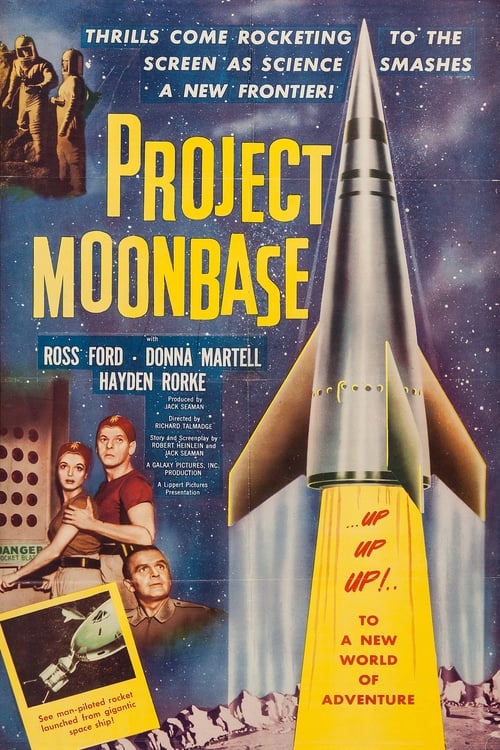
Project Moon Base
1953
No user ratings available yet
Representation score: 0.5 out of 10
Representation Score
Minimal
1950
ApprovedDirector
Irving Pichel
Runtime
91 minutes
Average Rating
No ratings yetNew Showbiz Analysis
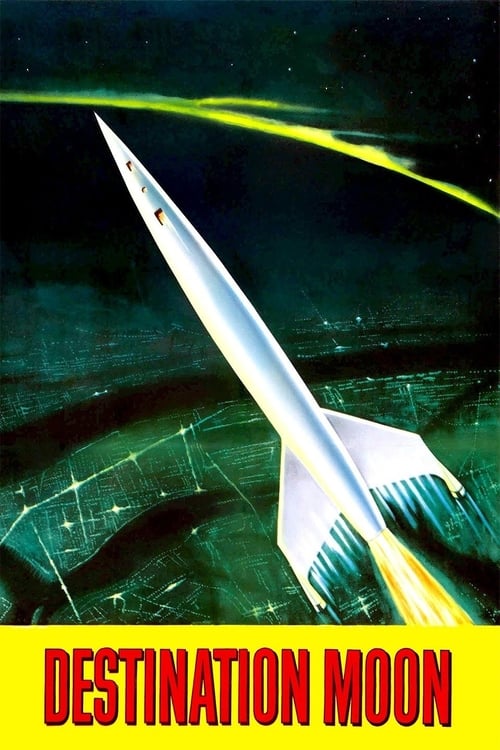
Destination Moon celebrates the technological achievements of mid-20th century Western society. The narrative emphasizes traditional hierarchies, focusing on military discipline, scientific precision, and industrial collaboration over social intricacies. The film aligns closely with the demographic norms of its time. It centers on the capabilities of male authority figures and does not challenge established power structures or consider multiple layers of identity. In essence, the film upholds the social order of the 1950s. It portrays a world where survival hinges on following protocols and the stability of Western institutions.
Category Breakdown
The film does not include any visible LGBTQ+ characters or explore non-straight relationships. The social setting stays focused on straight relationships throughout the story.
Men hold all the key roles as scientists and military leaders. Women are shown only in supporting roles like wives, which reinforces traditional gender roles.
The cast is uniform, showing scientific and military leadership as an entirely white effort. It presents a singular view of American identity typical of the 1950s.
The story promotes Western values like capitalism, patriotism, and scientific advancement. Success is linked to the blend of industry, government, and military discipline.
The film does not prominently feature characters with physical or cognitive differences. Characters are portrayed as idealized, able-bodied types suited for space travel.
Present on Screen
Limited or Absent
Official Synopsis
A team composed of an aerospace scientist, an ex-Air Force general, and an industrialist conceives an ambitious plan to land Americans on the moon. From their base in the Mojave Desert, they construct and successfully launch a spacecraft named "Luna" that contains a cargo of four astronauts. But a critical miscalculation of needed power to escape the moon's gravitational pull may put the astronauts' lives in danger.
1953
1929
1954

1936

1965

1964
1902
1954
No reviews yet. Be the first to share your thoughts on this movie!
Use the rating form above to leave a star rating and optional review.