
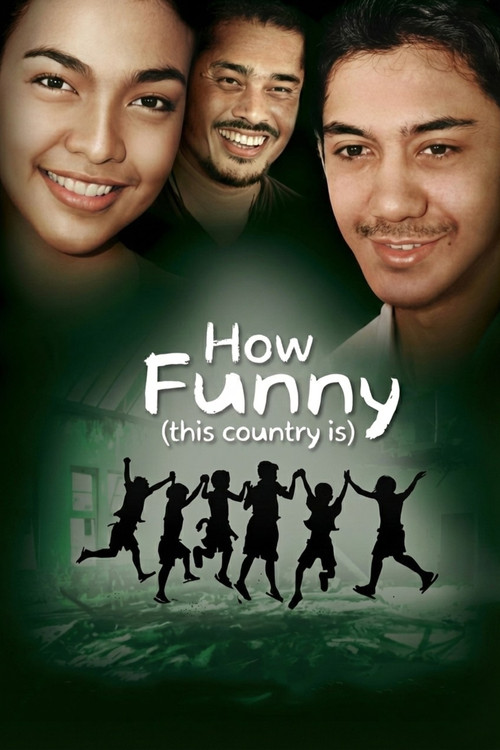
The Guidance Patrol
2012
No user ratings available yet
Representation score: 5.0 out of 10
Representation Score
Fair
2010
Director
Deddy Mizwar
Runtime
105 minutes
Average Rating
No ratings yetNew Showbiz Analysis
Deddy Mizwar employs social satire to explore the complexities of Indonesian social structures. The film successfully offers a non-Western perspective that challenges systemic socio-economic hierarchies and traditional familial authority. However, the narrative remains heavily male-centric, focusing on the struggles of three male graduates. This limits the breadth of gender representation despite the film's subversion of patriarchal decision-making. While the film excels at cultural commentary and portrays underrepresented groups with ability to act, it lacks visibility for LGBTQ+ identities and disability representation.
Category Breakdown
The film does not include any explicit LGBTQ+ characters or narratives. Instead, it focuses on socio-economic struggles and traditional family dynamics.
The story revolves around three male characters dealing with career changes. While the film is male-driven, it also critiques traditional patriarchal structures and generational authority.
As an Indonesian production, it provides a non-Western viewpoint. It highlights the ability to act of underrepresented street-dwelling populations, offering insight into domestic stratification.
The narrative engages deeply with systemic critique and social reform. It uses satire to question established institutional norms and traditional social expectations.
There is no evidence of physical or neurodivergent disability representation within the provided narrative details.
Present on Screen
Limited or Absent
Official Synopsis
Three freshly graduated adults try to educate young beggars to become street vendors, but are opposed by their fathers.
2012

2016

2023
2009
2020
2003
2022
2010
No reviews yet. Be the first to share your thoughts on this movie!
Use the rating form above to leave a star rating and optional review.