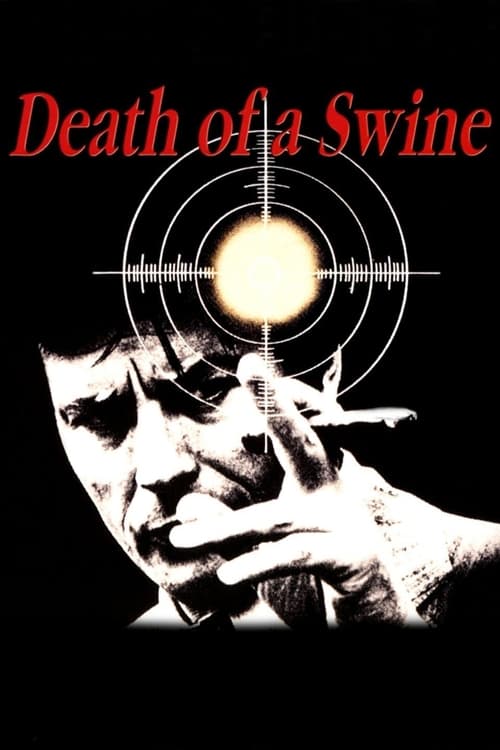
Death of a Corrupt Man
1977
No user ratings available yet
Representation score: 1.7 out of 10

Representation Score
Minimal
1975
RDirector
Marcello Aliprandi
Runtime
100 minutes
Average Rating
No ratings yetNew Showbiz Analysis
The film opens in a sterile, black-and-white courtroom where documents and shadowed faces establish a tone of cold bureaucratic efficiency. This visual austerity sets the stage for a critique of the Italian judicial system, where the camera lingers on the exhaustion of judges rather than the drama of the case. The sold meaning is that the law is a blunt instrument, a performance that obscures truth rather than revealing it. Franco Nero’s Judge Dani is framed as the sympathetic outsider, his rugged intensity contrasting with the aristocratic decay of Fernando Rey’s Judge Vanini, yet both are trapped within the same hollow procedural machinery. The film’s argument pulls apart when it claims to denounce institutional corruption while ultimately rewarding the system’s procedural closure. The final image focuses on the aftermath of the verdict, leaving the audience with unresolved tension rather than moral clarity. The judges, including Vanini, never truly pay for their complicity; they maintain their rank and status even as the moral weight of the case crushes the individual. Flavia, the female catalyst, remains a passive prize whose fate is determined by the men in the room, highlighting the gendered dynamics of a system that treats women as objects of legal scrutiny rather than agents of justice. This 1975 production, adapted from a Kafkaesque play, loses some of its symbolic power by grounding the critique in concrete Italian institutional problems. The result is a film that is entertaining in its noir-inflected tension but thin in its resolution, where the "punchline" is the realization that justice is a performance. The camera loves the system’s cold detachment, treating the verdict as a hollow victory that affirms the status quo over individual morality.
Category Breakdown
No queer intimacy or identity appears in this 1975 courtroom drama. The narrative focuses entirely on heterosexual judicial dynamics and institutional corruption, leaving LGBTQ+ perspectives completely absent from the frame.
Mara Danaud’s Flavia serves as a passive catalyst whose fate drives the male judges’ actions. She remains an object of legal scrutiny rather than an active agent, lacking independent moral voice or procedural power in the male-dominated space.
The cast is entirely white, reflecting the homogeneous Italian judicial setting of the 1970s. Martin Balsam’s presence marks a minor national distinction, but no racial diversity or non-white perspectives are depicted on screen.
The film critiques the Italian judicial system’s bureaucratic inertia and moral ambiguity, portraying institutional authority as hollow and corrupt. Judges maintain their status despite systemic failure, treating legal procedure as a shield against individual justice.
No characters with physical, sensory, or cognitive disabilities appear in the cast or plot. The narrative focuses on institutional corruption and legal procedure, with no depiction of impairment, accessibility, or disabled life.
Present on Screen
Limited or Absent
Official Synopsis
During an inquest, an ambitious judge finds out that a lot of high-rank politicians are corrupt to the core.
1977

1976
1964

1974
1951

1973

1973
1975
No reviews yet. Be the first to share your thoughts on this movie!
Use the rating form above to leave a star rating and optional review.