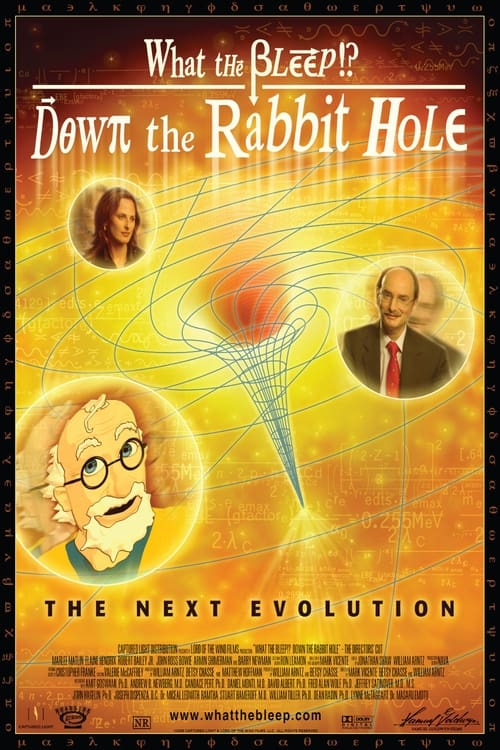
What the Bleep! Down the Rabbit Hole
2006
No user ratings available yet
Representation score: 7.7 out of 10
Representation Score
Good
2004
Not RatedDirector
William Arntz, Betsy Chasse, Mark Vicente
Runtime
109 minutes
Average Rating
No ratings yetNew Showbiz Analysis
The film disrupts Western epistemological hierarchies by presenting a multifaceted view of reality. It goes beyond a purely materialist perspective to incorporate various philosophical frameworks. By placing a female protagonist at the heart of a traditionally male-dominated intellectual space, the film highlights women's significant role in driving the narrative. The inclusion of global thinkers ensures the narrative is not confined to a Western-centric viewpoint. However, the film does not specifically address LGBTQ+ identities or disabilities, limiting its engagement with social identity diversity.
Category Breakdown
The film avoids focusing on specific LGBTQ+ identities and instead centers on philosophical inquiries. It steers clear of both direct representation and negative stereotypes related to queer individuals.
Amanda, the female lead, drives the exploration of reality. Her journey challenges male-dominated scientific ideas by highlighting a woman's intellectual and spiritual awakening as a means to universal truth.
The film incorporates a wide range of global thinkers, moving away from an Anglo-centric viewpoint. This approach includes non-Western perspectives in discussions about consciousness.
The film questions Western scientific thought by emphasizing Eastern philosophical traditions. It promotes a subjective understanding of existence that values diverse philosophical viewpoints over empirical science.
The film does not depict any significant instances of physical or neurodivergent disabilities. None of the characters use disability as a central plot device or defining trait.
Present on Screen
Limited or Absent
Official Synopsis
Amanda is a divorced woman who makes a living as a photographer. During the Fall of the year Amanda begins to see the world in new and different ways when she begins to question her role in life, her relationships with her career and men and what it all means. As the layers to her everyday experiences fall away insertions in the story with scientists, and philosophers and religious leaders impart information directly to an off-screen interviewer about academic issues, and Amanda begins to understand the basis to the quantum world beneath. During her epiphany as she considers the Great Questions raised by the host of inserted thinkers, she slowly comprehends the various inspirations and begins to see the world in a new way.
2006
2017

2006

2013

2008
2022
2010

2024
No reviews yet. Be the first to share your thoughts on this movie!
Use the rating form above to leave a star rating and optional review.