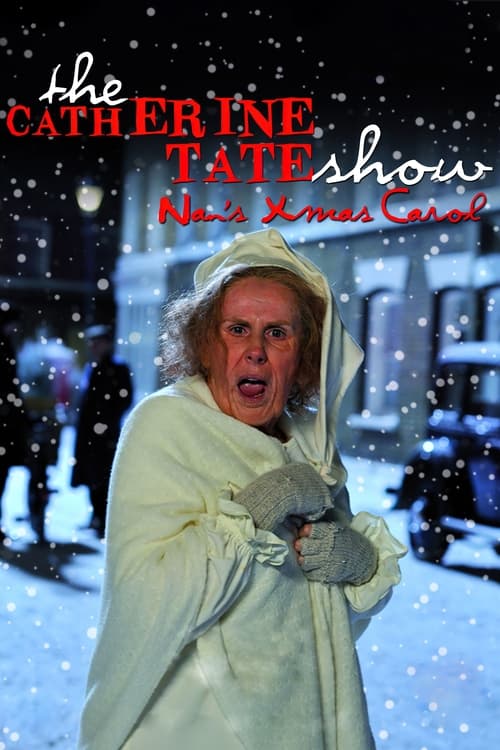
The Catherine Tate Show: Nan's Christmas Carol
2009
No user ratings available yet
Representation score: 4.1 out of 10

Representation Score
Limited
2007
TV-PGDirector
Mark Jean
Runtime
87 minutes
Average Rating
No ratings yetNew Showbiz Analysis
The film opens on a snowy, quiet suburban street, establishing a soft-focus, warm domesticity that immediately signals its Hallmark aesthetic. This visual language sells a world where individual selfishness is punished by isolation, and collective harmony is rewarded with warmth. The sold meaning is clear: the traditional nuclear family, or close-knit group, is the ideal, and women’s friendships are ultimately stronger than business interests or male egos. The film’s argument is tested against its internal logic in the scene where Ally Simms (Emma Caulfield) publicly empowers her assistant Gillian to fire her cheating boyfriend. This moment positions women as the competence and moral center, while men are reduced to reactive objects or comic relief. The camera lingers on Ally and her love interest Matt (John Reardon), granting them beauty lighting and slow-motion looks, while the antagonist Jackie (Barbara Niven) is framed in tighter, colder shots. This visual contrast reinforces the moral message without needing explicit lectures. The ending settles the film’s values in a group hug or shared meal in a cozy interior. The moral arithmetic is that individual selfishness is punished by isolation, and collective harmony is rewarded with warmth. The film’s argument is thin but consistent: the traditional family unit is the good, and the camera loves the restoration of that unit. A liker and a hater must both recognize the pictures: the film is genuinely entertaining on its own terms, selling a vision of domestic harmony without adding a sermon the pictures do not support.
Category Breakdown
The narrative remains strictly heterosexual, offering no same-sex intimacy or queer identities. Romantic pairings follow conventional male-female dynamics without deviation, leaving the spectrum entirely unexplored on screen.
Ally Simms drives the plot as a competent radio host who publicly empowers her assistant to fire her cheating boyfriend. Men function as reactive objects or comic relief, while women hold the moral center and narrative agency.
The cast is overwhelmingly white, reflecting an unmarked suburban default. Doron Bell provides minor non-white presence as a supporting character, but no racial dynamics are explored or challenged within the story.
The film treats the nuclear family and romantic reconciliation as the moral ideal. The ending rewards domestic harmony and forgiveness, positioning individual selfishness as the primary obstacle to collective warmth.
No characters are depicted with physical, mental, or sensory disabilities. All bodies conform to standard, able-bodied aesthetics without impairment serving as a narrative element or source of conflict.
Present on Screen
Limited or Absent
Official Synopsis
In this Valentine’s Day riff on Charles Dickens’ A Christmas Carol, a cynical, superficial radio talk show host is visited by the ghost of her predecessor, who shows her the error of her ways.
2009

1984

2013

1999

2019

2015
2004

2019
No reviews yet. Be the first to share your thoughts on this movie!
Use the rating form above to leave a star rating and optional review.