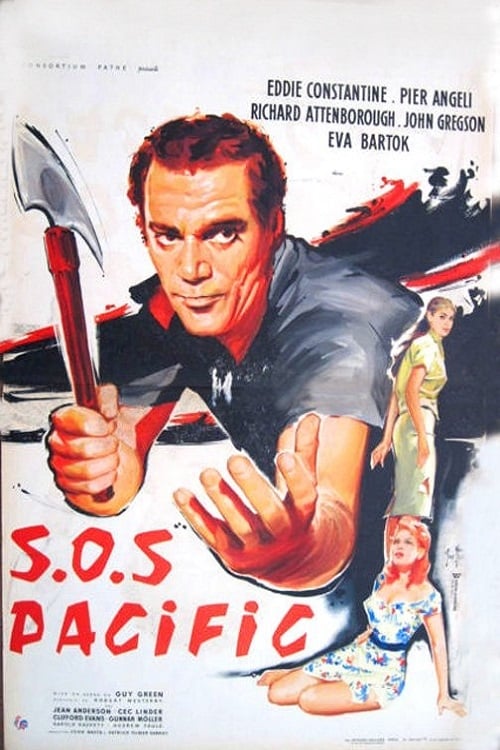
SOS Pacific
1959
No user ratings available yet
Diversity score: 1.6 out of 10

1939
Director
John Farrow
Runtime
75 minutes
Average Rating
No ratings yetSynopsis
Twelve people are aboard Coast Air Line's flagship the Silver Queen enroute to South America when the airplane encounters a storm and is blown off course. Crashing into jungles known to be inhabited by head hunters, pilots Bill and Joe race against time to fix the engines and attempt a take off. The situation brings out the best and worst in the stranded dozen as they create a makeshift runway and prepare to escape before the natives attack. But damage to the plane and low fuel reserves means that only 5 people can be carried to safety.
Overall Score
Limited
Category Breakdown
LGBTQ+ Representation
The film contains no discernible LGBTQ+ characters or queer intimacy. Social dynamics remain entirely heteronormative, adhering to standard 1930s character archetypes.
Gender Representation
Narrative agency is concentrated in male characters like the pilots and soldiers. Female characters are largely reactive, occupying traditional damsel or vulnerable passenger tropes.
Racial & Ethnic Diversity
The cast is predominantly homogeneous and Western-centric. Indigenous characters function as a monolithic, decontextualized threat rather than nuanced individuals, reinforcing colonial-era tropes.
Religious & Cultural Diversity
The story operates within a traditional Western moral framework. Conflict centers on survival and social class friction rather than any critique of Western institutions.
Disability Representation
There is no significant depiction of visible or invisible disabilities. Physical trauma serves only as a plot device to heighten survival stakes.
Strengths
Areas for Improvement
AI Analysis
Five Came Back is a survival drama that reflects the rigid social hierarchies of 1939. The narrative relies on masculine competence and traditional gender roles to drive the tension of the crash scenario. While the film explores interpersonal friction through socioeconomic class, it fails to provide meaningful representation for non-Western characters. The use of indigenous groups as a primitive antagonist reinforces colonialist perspectives common to the era. Ultimately, the film functions as a closed-system survivalist trope. It prioritizes individual grit and established social orders over any form of intersectional complexity or systemic critique.
1959

1954
1934

1961
1956

1956

1942
No reviews yet. Be the first to share your thoughts on this movie!
Use the rating form above to leave a star rating and optional review.