
Who Wants to Kill Jessie?
1966
No user ratings available yet
Representation score: 4.5 out of 10
Representation Score
Minimal
1983
Director
Vitaliy Melnikov
Runtime
90 minutes
Average Rating
No ratings yetNew Showbiz Analysis
The film opens in a sterile Soviet laboratory, establishing a world of bureaucratic normalcy before the supernatural intrudes. This setting frames the central conflict not as a high-concept sci-fi mystery, but as a domestic crisis. The "phenomenon" is not a heroic power but a disruption to the household order, manifesting in Konstantin as a loss of control that threatens his reputation and his wife’s peace. The camera consistently favors Tatyana, lighting her warmly as the moral center who must navigate the chaos of her husband’s mind and the cynicism of the medical system. The sold meaning is that domestic stability is the highest value, and any deviation—whether supernatural or social—must be absorbed by the wife’s patience and the husband’s return to normalcy. The film’s argument pulls apart when it critiques the system’s flaws through the bribe-taking psychiatrist, yet ultimately validates the system’s core goal: the containment of the "abnormal." The "danger" is not physical violence but social deviance, and the cure is not understanding but conformity. The ending settles this tension by rewarding the restoration of the nuclear family. Konstantin is shown in a state of calm, domestic resolution, his power suppressed and his role as a compliant husband restored. Tatyana is not billed for the trauma of managing the phenomenon, but her approval is the final reward. The film’s moral verdict is clear: the individual must submit to the social order, and the home is the only place where the "monster" can be safely managed. The supernatural is deflated by the domestic, and the liberal promise of individual expression is sacrificed for the conservative comfort of the status quo.
Category Breakdown
The narrative centers exclusively on the heterosexual marriage between Konstantin and Tatyana. No same-sex intimacy, queer identity, or non-binary characters appear on screen or in dialogue.
Tatyana serves as the moral anchor and competent manager of the household, navigating bureaucracy and her husband’s psychic episodes. Konstantin is framed as the unstable anomaly whose power is a defect requiring domestic containment. The film rewards the wife’s patience and the restoration of the traditional nuclear unit.
The cast is entirely ethnically Russian/Soviet, reflecting the unmarked majority of the setting. No non-white characters, immigrant experiences, or racial dynamics are depicted or discussed.
Soviet bureaucratic institutions and the family unit are treated as the ultimate stabilizing forces. The "phenomenon" is framed as a threat to social order, resolved only through the suppression of individual deviation. The system’s flaws are noted via satire, but its core values of conformity and domestic stability remain unchallenged.
Konstantin’s psychic abilities are framed as a medical condition or illness requiring treatment and control. The medical establishment categorizes his "abnormality" as a defect to be managed. There is no representation of disability as a positive identity or lived experience beyond the "sick" metaphor.
Present on Screen
Limited or Absent
Official Synopsis
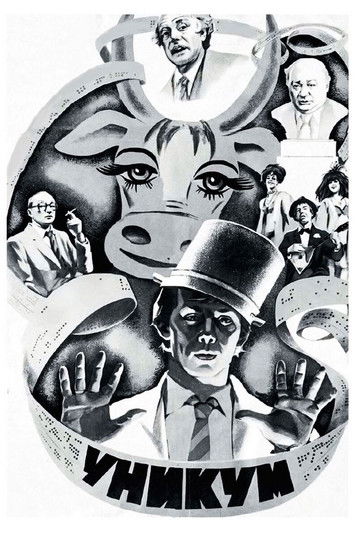
One soviet programmer has problems in his job. He is laughed at by women, they think he is too awkward. His chiefs are giving no rest to him. In addition to that they give him very difficult project to be done very soon. Overcoming himself he does impossible. After closing away in his office and spending there several days and nights without sleep he finds some solution and immediately fells asleep. After waking up after very surrealistic dream he surprises of what has happened while he was asleep. And the miracles have just started for him…
1966
1973

2014

1986

1980

1985
2017
2023
No reviews yet. Be the first to share your thoughts on this movie!
Use the rating form above to leave a star rating and optional review.