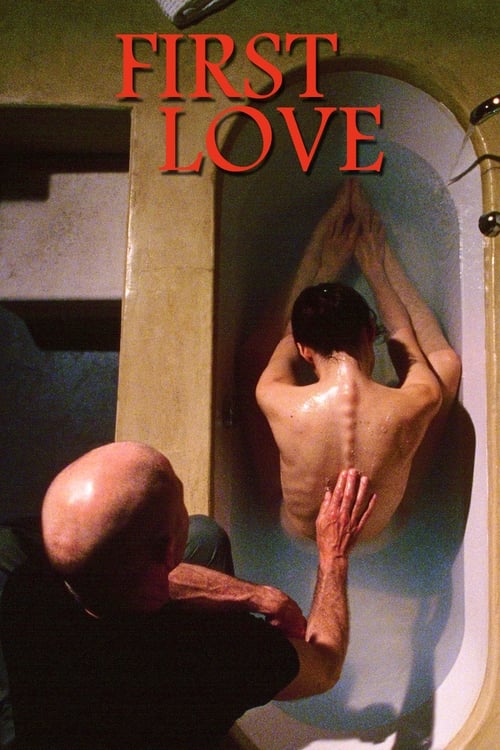
First Love
2004
No user ratings available yet
Representation score: 6.6 out of 10

Representation Score
Excellent
2010
Not RatedDirector
Lim Woo-seong
Runtime
100 minutes
Average Rating
No ratings yetNew Showbiz Analysis
The film effectively challenges traditional social hierarchies, especially those related to gender and cultural norms. By focusing on a woman's radical rejection of domestic norms, it provides a powerful critique of patriarchal control and Confucian family structures. However, the narrative remains culturally uniform and lacks explicit LGBTQ+ representation. While it disrupts straight-centered roles, it doesn't center on queer identities, limiting its scope in that area. Overall, the film is a profound exploration of individual ability to act against systemic oppression, offering a localized, non-Western perspective on the struggle for autonomy within a rigid society.
Category Breakdown
The film doesn't explicitly show LGBTQ+ identities or romantic pairings. However, it explores how the protagonist rejects traditional marital roles, disrupting the idea of a typical heterosexual marriage.
The story strongly criticizes patriarchal structures. Male characters are shown as agents of systemic violence, while females are portrayed with psychological autonomy.
As a South Korean production, the cast is culturally uniform. It highlights the tension between personal freedom and societal conformity, providing a non-Western perspective on individual ability to act.
The film critically examines Confucian-rooted family structures and social conformity. It uses the protagonist's change in diet as a symbol for rejecting the violence inherent in modern social structures.
The film looks at mental health and neurodivergence through the protagonist's journey into a non-standard psychological state. It avoids 'inspiration porn' by focusing on her internal experiences.
Present on Screen
Limited or Absent
Official Synopsis
An ordinary housewife, Yeong-hye, who has nightmares every night, finally becomes a vegetarian, throwing away all the meats in her refrigerator. Her husband Kil-soo starts to complain about her actions. Her family also worries about her health. During a family lunch, Yeong-hye tries to kill herself due to her father's abrupt violence. Observing all the happenings, Yeong-hye's brother-in-law, Min-ho, a videoartist, hears from his wife that Yeong-hye has a Mongolian spot on her hips. Min-ho gets inspiration from this and starts to sketch.
2004

2013

2019
2004

2017

2020

2010

2007
No reviews yet. Be the first to share your thoughts on this movie!
Use the rating form above to leave a star rating and optional review.