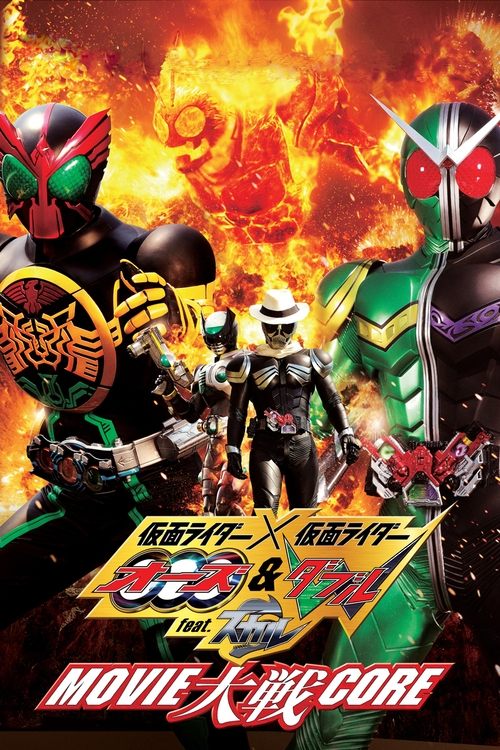
Kamen Rider × Kamen Rider OOO & W Featuring Skull: Movie Wars Core
2010
No user ratings available yet
Representation score: 3.3 out of 10
Representation Score
Limited
2025
Director
Teruaki Sugihara
Runtime
59 minutes
Average Rating
No ratings yetNew Showbiz Analysis
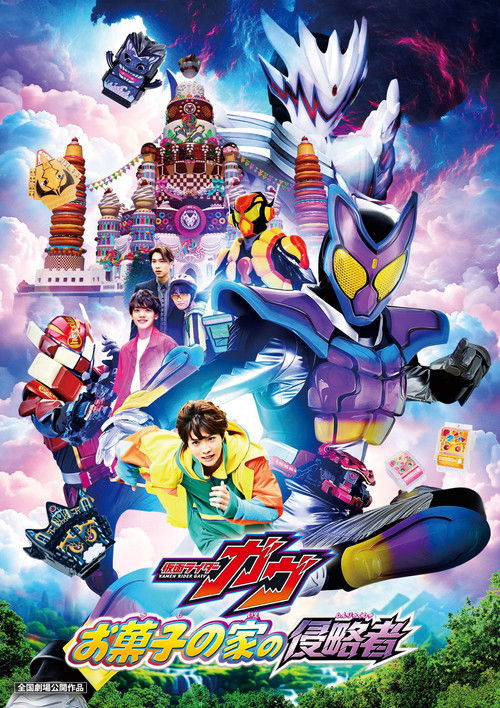
The film opens on the looming, surreal architecture of the Candy House, a literalized sugar-coated dystopia that sets the tone for a tokusatsu entry steeped in *Alice in Wonderland* imagery. This visual excess is not merely aesthetic; it is the film’s central argument against consumerism. The narrative positions the Candy House as a trap of material comfort, a place where characters are "fed" and "cared for" until their individuality is erased. Shoma Stomach, the rugged, working-class protagonist, stands in stark contrast to this sweetness. His grit and physical labor are framed as the antidote to the hollow, aristocratic emptiness of the candy world’s inhabitants. The sold meaning is clear: true strength comes from being "bitter" or "raw," rejecting the seductive lie that everything is sweet. The camera lingers on Shoma’s suffering, treating his physical pain as noble and his eventual destruction of the Candy House as a necessary cleansing. This is not a simple rejection of pleasure, but a moral arithmetic where eating the enemy’s source of power is the only way to end the cycle. The film’s internal logic holds that material wealth is a form of poverty, and that the hero’s act of consumption is a metaphor for rejecting materialism. The ending settles this moral verdict with Shoma standing amidst the remnants of the Candy House, having consumed the final candy. He is rewarded not with wealth, but with the validation of his spiritual richness. Taorin, the polished but hollow aristocrat, pays for his arrogance with a quick, painless death, a slapstick end to a villain who never understood the value of labor. The film’s argument is thin in its sociological depth but consistent in its visual language: the pink and white palette is a deliberate unease, and the hero’s victory is a rejection of the system that sought to feed him.
Category Breakdown
No queer characters or same-sex intimacy appear. Relationships remain strictly heterosexual within the tokusatsu framework. The narrative offers no non-binary identities or alternative romantic structures.
Sachika Amane serves as the empathetic civilian anchor, providing emotional support rather than tactical competence. Male riders hold the action and decision-making roles. The female character remains a passive observer in the surreal conflict.
The cast is entirely Japanese, reflecting the production’s domestic context. No non-white characters or cross-cultural dynamics are depicted. The narrative and visual design lack ethnic variety.
The Candy House satirizes consumerism, framing unchecked consumption as a trap. Shoma’s destruction of the structure rejects material wealth in favor of spiritual grit. Traditional merit and labor are positioned as the moral center.
No characters with physical, sensory, or cognitive disabilities are present. The narrative relies on supernatural transformation and physical combat. Medical or bodily impairment is absent from the plot.
Present on Screen
Limited or Absent
Official Synopsis
After being pulled through a door, Shoma finds himself in a peaceful world where Dark Treats do not exist?! In this world, Hapipare still exist, but a young man named Taorin who has Gavv works there. Taorin has no memory of his past, and Shoma decides to help him recover his memories. Meanwhile, a man named Caries begins indiscriminately attacking the town, and the peaceful world is transformed! The two struggle to restore peace and arrive at a huge Candy House. The two are on the verge of grasping something, but Caries transforms with an unknown Gochizo and corners Shoma and the others! What is the soruce of the overwhelming power that this most terrifying enemy has obtained?! What are Taorin's lost memories?!
2010
2010
2007

2007
2014
2010
2019
2018
No reviews yet. Be the first to share your thoughts on this movie!
Use the rating form above to leave a star rating and optional review.