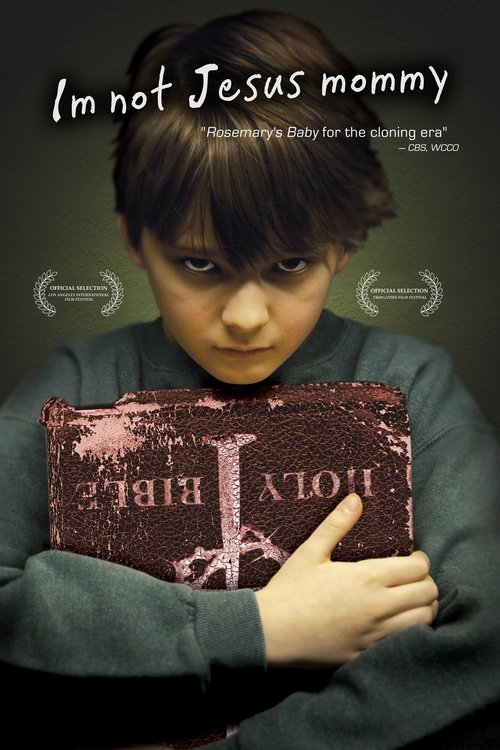
I'm Not Jesus Mommy
2010
No user ratings available yet
Representation score: 6.2 out of 10

Representation Score
Fair
2003
Director
Rolf Schübel
Runtime
108 minutes
Average Rating
No ratings yetNew Showbiz Analysis
Blueprint is a character-driven science fiction drama that prioritizes philosophical inquiry over broad social representation. The film's primary strength lies in its focus on women's ability to drive the story and the deconstruction of biological identity through the lens of a world-famous composer. However, the narrative lacks explicit engagement with LGBTQ+ themes or visible racial diversity. The focus remains tightly centered on the existential implications of cloning and the maternal bond, leaving other multi-layered dimensions unaddressed. Ultimately, the film succeeds in subverting gendered passivity but remains limited in its scope of social representation, resulting in a moderate diversity profile.
Category Breakdown
The film focuses on biological replication and maternal bonds rather than sexual orientation. There is no explicit evidence of LGBTQ+ characters or narratives that critique the assumption that everyone is straight or cisgender.
Iris Sellin is a highly accomplished composer who drives the plot through her decisive actions. This subverts traditional clichés of female passivity by centering women's ability to drive the story.
The available information provides no details regarding the racial or ethnic composition of the cast or characters. No assessment can be made regarding this category.
The story explores the tension between individual legacy and social norms. It challenges traditional views on the sanctity of life through a techno-centric view of existence.
The plot is driven by Iris Sellin's incurable illness. Her response to this physical limitation suggests a complex exploration of how chronic illness influences life-altering decisions.
Present on Screen
Limited or Absent
Official Synopsis
The story of the first cloned human being - told in her own words: At the age of thirty the world-famous composer Iris Sellin learns that she has an incurable illness. She - a person who wanted to live for ever - does however not give in. In order to preserve her art and also herself, beyond death, for all posterity, she has herself cloned. Her daughter Siri, whom, in this way, she turns into her virtual twin, learns as a child that she is the world's first cloned human being. In fact a blueprint: a blueprint of her mother. From that moment on nothing is as it was before...
2010
1980
2004
2004

2014
2010
2008

2000
No reviews yet. Be the first to share your thoughts on this movie!
Use the rating form above to leave a star rating and optional review.