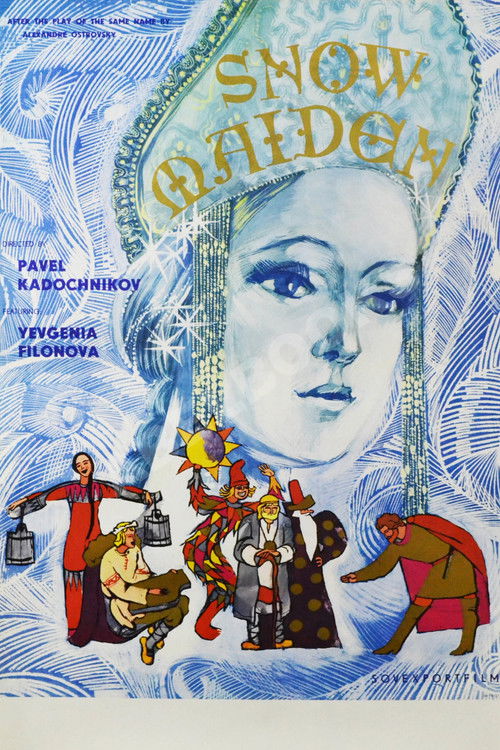
The Snow Maiden
1968
No user ratings available yet
Representation score: 1.2 out of 10

Representation Score
Limited
1946
Director
Aleksandr Ptushko
Runtime
78 minutes
Average Rating
No ratings yetNew Showbiz Analysis
The Stone Flower is a celebration of craftsmanship and the working class. It highlights the spiritual value of skill and presents a strong, independent female character. However, the film lacks modern diversity, focusing on a homogeneous ethnic background and traditional gender roles. The narrative adheres to the cultural context of mid-century Russian fairy tales, limiting its scope in terms of contemporary representation.
Category Breakdown
The film follows traditional folkloric archetypes and contains no depictions of LGBTQ+ identities or same-sex intimacy.
The film features a powerful female character with significant influence, but it also relies on traditional gender roles and romantic archetypes.
The cast is made up of actors who reflect the specific historical and folkloric Russian setting of the Ural Mountains, without racial or ethnic diversity.
The film celebrates the dignity of labor and the mastery of craft, using a secular, mythic folklore rather than organized religious institutions.
The film does not prominently depict physical or neurodivergent disabilities that play a central role in the plot.
Present on Screen
Limited or Absent
Official Synopsis
Little Danila was the most inquisitive apprentice of old Prokopich, a famous stone-carving master. Like his teacher, the grown-up Danila has learned to feel the soul of his material and became an expert in handling rare precious stones found in the Ural Mountains. One day he met the Mistress of the Copper Mountain, a fairy who ordered for herself an unusual stone flower.
1968
1973

1972
1977

1968
1954
1951

1968
No reviews yet. Be the first to share your thoughts on this movie!
Use the rating form above to leave a star rating and optional review.