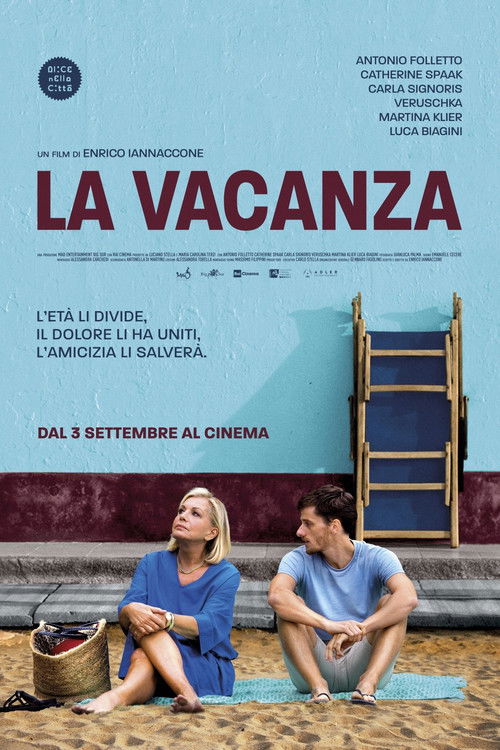
La vacanza
2020
No user ratings available yet
Representation score: 4.4 out of 10

Representation Score
Good
2025
Director
Alessandro Aronadio
Runtime
115 minutes
Average Rating
No ratings yetNew Showbiz Analysis
Per te is a deeply empathetic drama that finds its strength in the intimate, shifting dynamics of a family facing cognitive decline. By centering on the relationship between Paolo and his son, Mattia, the film elevates the quiet dignity of caregiving. It successfully moves beyond mere medical drama to explore how love restructures familial roles. While the film excels in its nuanced depiction of disability, it remains within a conventional demographic framework. The cast and setting reflect a specific, localized Italian reality that lacks broader racial or LGBTQ+ diversity. However, the subversion of the traditional 'provider' role through female resilience and childhood maturity provides significant emotional depth. Ultimately, the film's value lies in its humanistic approach to neurodivergence. It transforms a private struggle into a meaningful study of connection, laughter, and silence.
Category Breakdown
The film focuses on a traditional family unit and does not include any explicit representation of LGBTQ+ identities or diverse sexual orientations.
Michela plays a crucial role in maintaining family cohesion through her resilience and active involvement.
The drama is set in a homogeneous Italian environment without much diversity in ethnicity or race.
The narrative explores the family's crisis through a humanistic lens, emphasizing lived experiences rather than religious or institutional solutions.
The film portrays Alzheimer’s disease by focusing on the ability to act of the patient and the caregiver's reality, avoiding typical tragedy-driven stories.
Present on Screen
Limited or Absent
Official Synopsis
In 2021, an 11-year-old boy named Mattia Piccoli was named Standard-bearer of the Republic by President Sergio Mattarella for "the love and care with which he daily follows his father's illness." This film tells his story and that of his father, Paolo, who, in his early forties, slowly begins to lose pieces of his memory. But just as the world begins to fade, he chooses to stay close to what truly matters, strengthened also by the love of his wife Michela. Together with his son, he embarks on a journey of shared daily life, sudden laughter, and silences that speak.
2020

2014

2018

2011

2021

2023
2010

2020
No reviews yet. Be the first to share your thoughts on this movie!
Use the rating form above to leave a star rating and optional review.