
Pulan Visaranai
1990
No user ratings available yet
Representation score: 2.3 out of 10
Representation Score
Fair
1999
Director
Joshiy
Runtime
178 minutes
Average Rating
No ratings yetNew Showbiz Analysis
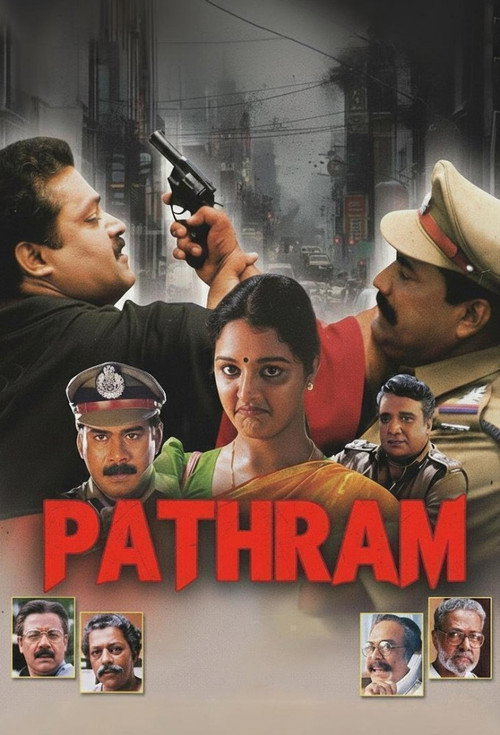
Pathram is a socio-political thriller that emphasizes critiquing corrupt institutions rather than showcasing diverse identities. It effectively deconstructs oppressive political power through investigative journalism and radical political ideologies. However, the film lacks diversity in gender and LGBTQ+ identities, focusing almost entirely on male-driven conflicts. The narrative remains rooted in the traditional social structures of its time. While it offers some cultural movement between Mumbai and Kerala, the character dynamics remain largely homogeneous, leaving significant gaps in representation for underrepresented groups.
Category Breakdown
The film follows traditional social norms typical of late-90s action cinema and does not include any LGBTQ+ characters or narratives about non-straight relationships.
The story focuses on male-driven conflicts and rivalries, with no indication of female characters having significant roles in driving the plot.
The film bridges the urban setting of Mumbai with the regional context of Kochi, providing some cultural movement. However, the cast remains ethnically uniform within a South Indian context.
The movie critiques traditional capitalist and political systems by portraying the textile mafia as an oppressive force. It explores radical ideologies through the inclusion of an old naxalite character.
There are no characters with disabilities that play a central role in the narrative or the main storyline.
Present on Screen
Limited or Absent
Official Synopsis
Nandagopal, an associate editor with Keralareshmi, one of the leading dailies, is aggressive and daring and enjoys a good reputation among the media circle. Born and brought up in Mumbai, Nandan is the son of Venugopal, a daring journalist who was killed by textile mafia long back. Nandan, in Kochi meets Sekharan, an old naxalite who is running Jagratha, a newspaper which is feared by political class. Sekharan's outspoken and belligerent nature had earned him more enemies than friends. He is constantly fighting Vishwathan, who rules Kochi with his muscle and money. Vishwanathan holds a large share in Keralareshmi and enjoys a huge political clout at state and central levels. Shekharan brings out the role of Vishwanathan in the murder of Vincent Paul, which creates a panic in the political level.
1990

2023
2016

2011
1987
1985
2010
2017
No reviews yet. Be the first to share your thoughts on this movie!
Use the rating form above to leave a star rating and optional review.