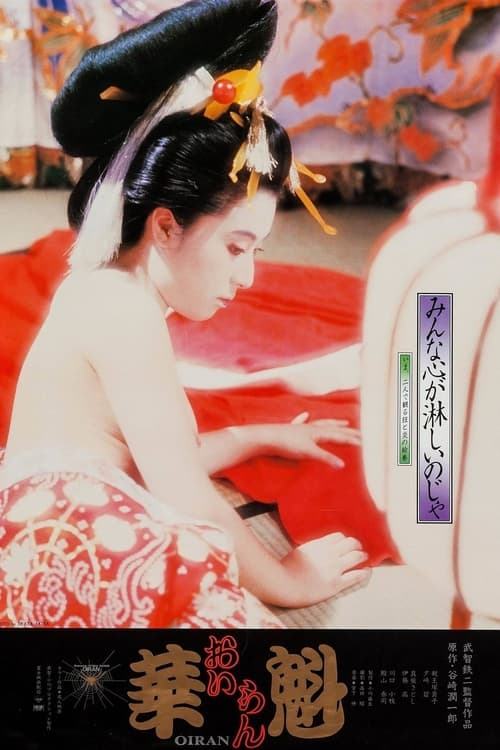
Oiran
1983
No user ratings available yet
Representation score: 8.1 out of 10

Representation Score
Good
2006
TV-MADirector
Takashi Miike
Runtime
63 minutes
Average Rating
No ratings yetNew Showbiz Analysis
Miike’s film excels at deconstructing traditional power structures, particularly through its subversion of gendered hierarchies. The female lead's role provides a sophisticated departure from conventional formulas. However, the film lacks demographic diversity. The cast is culturally homogeneous, and the narrative does not incorporate LGBTQ+ identities or multi-layered racial perspectives. While the exploration of mental instability is central, it leans into genre-driven horror rather than providing a nuanced study of lived experience with disability.
Category Breakdown
The film focuses entirely on a heterosexual relationship and does not include non-binary gender identities or queer romantic relationships. It centers on psychological and existential themes.
The female protagonist drives the plot with an aggressive, predatory role that challenges passive female stereotypes. This shift places the male character in a vulnerable position.
Set in 19th-century Japan, the film features a homogeneous Japanese cast. It lacks multi-ethnic diversity and remains focused within a single cultural context.
The narrative embraces moral relativism and critiques social stability. It avoids traditional moralizing, instead exploring human compulsion and the erosion of the individual through a surreal lens.
Mental instability and psychological deterioration serve as tools for horror and tension. These elements function as narrative devices for existential dread rather than nuanced depictions of neurodivergence.
Present on Screen
Limited or Absent
Official Synopsis
An American journalist travels through 19th-century Japan to find the prostitute he fell in love with but instead learns of the physical and existential horror that befell her after he left.
1983

1978

2007

1964
2001

2000

2004

2006
No reviews yet. Be the first to share your thoughts on this movie!
Use the rating form above to leave a star rating and optional review.