
WWE SummerSlam 2002
2002
No user ratings available yet
Diversity score: 2.6 out of 10
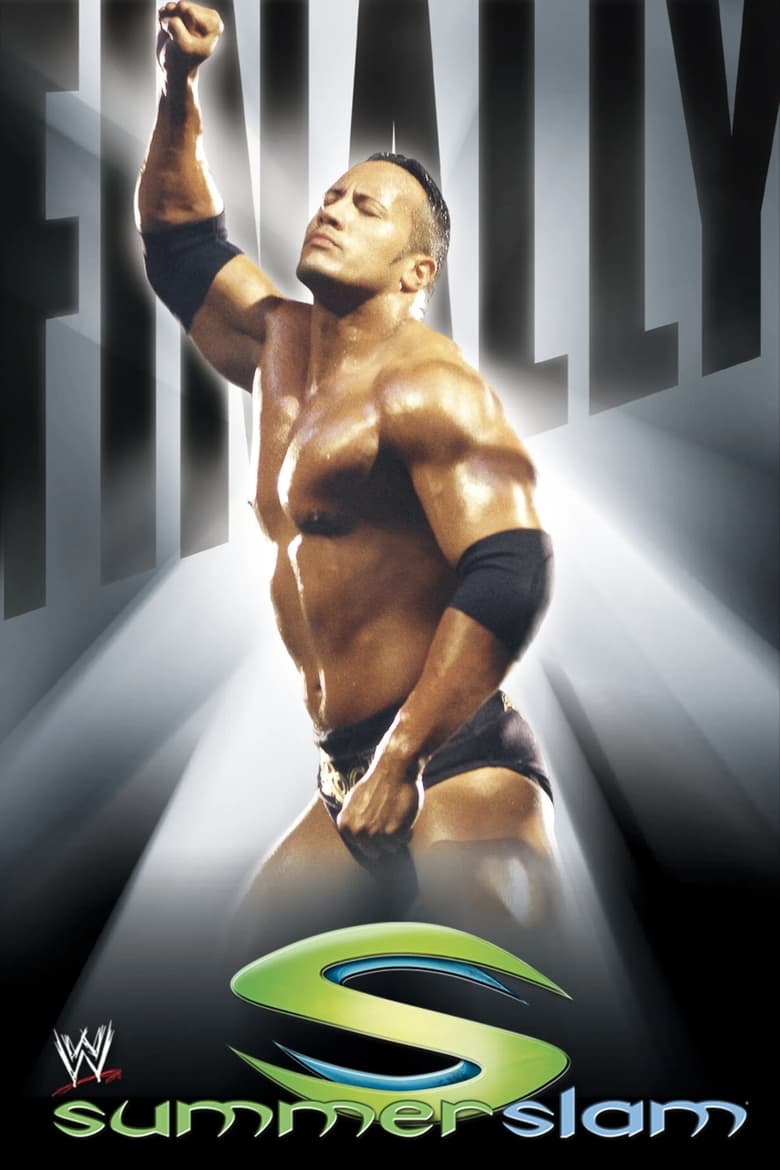
2001
TV-14Director
Kevin Dunn
Runtime
162 minutes
Average Rating
No ratings yetSynopsis
SummerSlam (2001) was the fourteenth annual SummerSlam PPV and the third presented by Chef Boyardee. It took place on August 19, 2001 at the Compaq Center in San Jose, California. The main event was Booker T versus The Rock for the WCW Championship. Another main match on the card was Steve Austin versus Kurt Angle for the WWF Championship. Also on the undercard was a Steel cage match between WCW Tag Team Champions Undertaker and Kane and WWF Tag Team Champions Diamond Dallas Page and Kanyon.
Overall Score
Limited
Category Breakdown
LGBTQ+ Representation
The broadcast lacks visible LGBTQ+ characters or narratives centered on non-heteronormative identities. The presentation adheres to standard social hierarchies of the era.
Gender Representation
Female competitors like Lita and Jazz provide physical agency through competition. However, the structural framework remains heavily centered on male-dominated championship hierarchies.
Racial & Ethnic Diversity
High-profile placement of performers like Booker T and The Rock provides significant agency to non-Anglo-Saxon performers. This disrupts the traditional homogeneity of the period.
Religious & Cultural Diversity
The production celebrates the disruption of authority and rebellious agency. It remains firmly rooted in a capitalist entertainment model without systemic critique.
Disability Representation
There is no evidence of visible or invisible disabilities being integrated into the character arcs or the athletic presentation.
Strengths
Areas for Improvement
AI Analysis
SummerSlam 2001 captures a transitional moment in sports entertainment. The event succeeds in diversifying its central protagonists by placing performers of color in marquee, high-stakes championship matches. This provides meaningful agency to diverse athletes within the main storylines. However, the broadcast remains tethered to hyper-masculine structures. The lack of LGBTQ+ representation and the absence of disability-focused narratives limit the scope of its inclusivity. While women compete, the broader event architecture is dominated by male-centric hierarchies. Ultimately, the production prioritizes high-octane spectacle and character-driven conflict over social nuance. It reflects the era's focus on rebellious, chaotic agency rather than a diverse or inclusive social commentary.
2002

2007

2004
2010

2008
2013
2003

2000
2012
2003
2002
2011
No reviews yet. Be the first to share your thoughts on this movie!
Use the rating form above to leave a star rating and optional review.