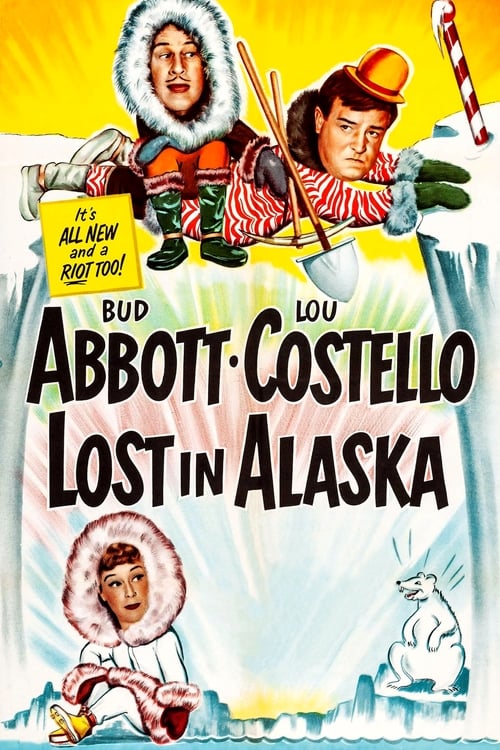
Lost in Alaska
1952
No user ratings available yet
Diversity score: 2.0 out of 10

1944
NRDirector
Jean Yarbrough
Runtime
75 minutes
Average Rating
No ratings yetSynopsis
Two bumbling plumbers are hired by a socialite to fix a leak. A case of mistaken identity gets the pair an invitation to a fancy party and an entree into high society. As expected, things don't go too smoothly
Overall Score
Limited
Category Breakdown
LGBTQ+ Representation
The film lacks any evidence of non-cisnormative identities or same-sex intimacy. It adheres to the heteronormative social structures typical of mid-century American cinema.
Gender Representation
While a female socialite drives the plot, the film relies on traditional gender roles. The comedy focuses on social etiquette rather than subverting gendered power dynamics.
Racial & Ethnic Diversity
The narrative centers on a white, Anglo-Saxon social hierarchy. This reflects the homogeneous casting practices common in 1940s high-society comedies.
Religious & Cultural Diversity
The story explores class friction between plumbers and socialites. However, it reinforces existing social orders through comedic reconciliation rather than critiquing Western institutions.
Disability Representation
No characters are identified as having visible or invisible disabilities. The protagonists' bumbling nature is a comedic trait of competence rather than a depiction of disability.
Strengths
Areas for Improvement
AI Analysis
In Society is a product of its time, functioning as a traditional 1944 B-movie comedy. It prioritizes escapism and situational irony over any meaningful social commentary or the deconstruction of hierarchies. The film relies heavily on established class-based tropes, using the friction between working-class plumbers and high-society elites to drive slapstick humor. While it explores social stratification, it does so to reinforce the status quo rather than challenge it. Ultimately, the production lacks representation across most identity-based categories, reflecting the demographic norms and homogeneous casting standards of the mid-century studio era.
No reviews yet. Be the first to share your thoughts on this movie!
Use the rating form above to leave a star rating and optional review.