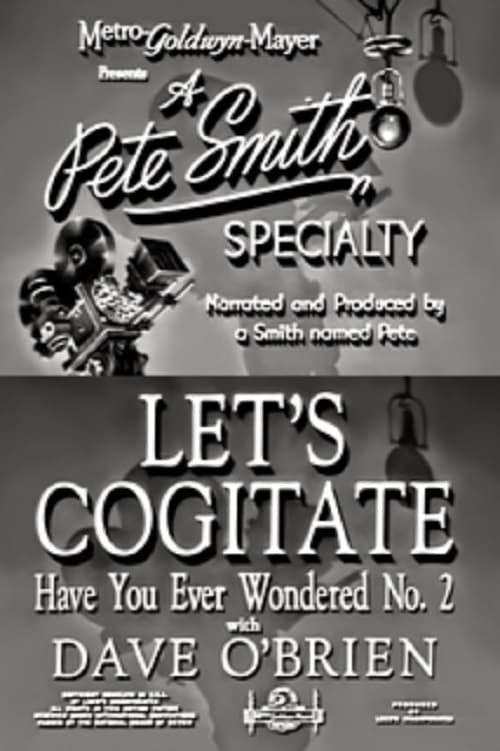
Let's Cogitate
1948
No user ratings available yet
Representation score: 0.5 out of 10
No Poster Available
Representation Score
Limited
1947
ApprovedDirector
Dave O'Brien
Runtime
10 minutes
Average Rating
No ratings yetNew Showbiz Analysis
This Pete Smith Specialty short serves as a lighthearted comedic piece focused on general curiosity. Given its reliance on observational humor and instructional themes, it lacks the narrative depth needed to explore complex identity politics or social critiques. The film reflects the traditionalist and homogeneous social standards of 1947. It operates within a mainstream studio framework that prioritizes conventional entertainment over challenging established social hierarchies. Ultimately, the work offers a snapshot of mid-century norms rather than an exploration of diverse identities or perspectives.
Category Breakdown
The film does not include any LGBTQ+ characters or themes, nor does it address issues related to the assumption that everyone is straight or cisgender.
The story adheres to traditional 1940s gender roles. Women do not challenge or subvert the expected domestic hierarchy or demonstrate intellectual superiority over men.
The cast likely consists of a homogeneous, Anglo-centric group typical of the time. There is no indication of characters of color taking a leading role or being portrayed outside traditional expectations.
The film aligns with mid-century Western comedic traditions. It presents a stable, conventional worldview without addressing anti-institutional or anti-capitalist sentiments.
Characters with disabilities do not have much control over their situations. Disability is not explored as a nuanced identity or theme.
Present on Screen
Limited or Absent
Official Synopsis
In this Pete Smith Specialty short, answers are sought regarding some things people may have wondered about.
1948
1946
1954
1951
1954
1949
1953
1946
No reviews yet. Be the first to share your thoughts on this movie!
Use the rating form above to leave a star rating and optional review.