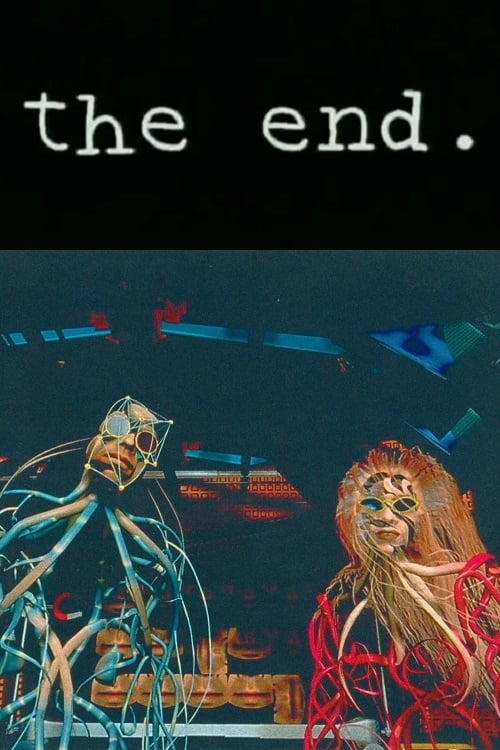
The End.
1995
No user ratings available yet
Diversity score: 5.7 out of 10
2013
Director
Chris Landreth
Runtime
11 minutes
Average Rating
No ratings yetSynopsis
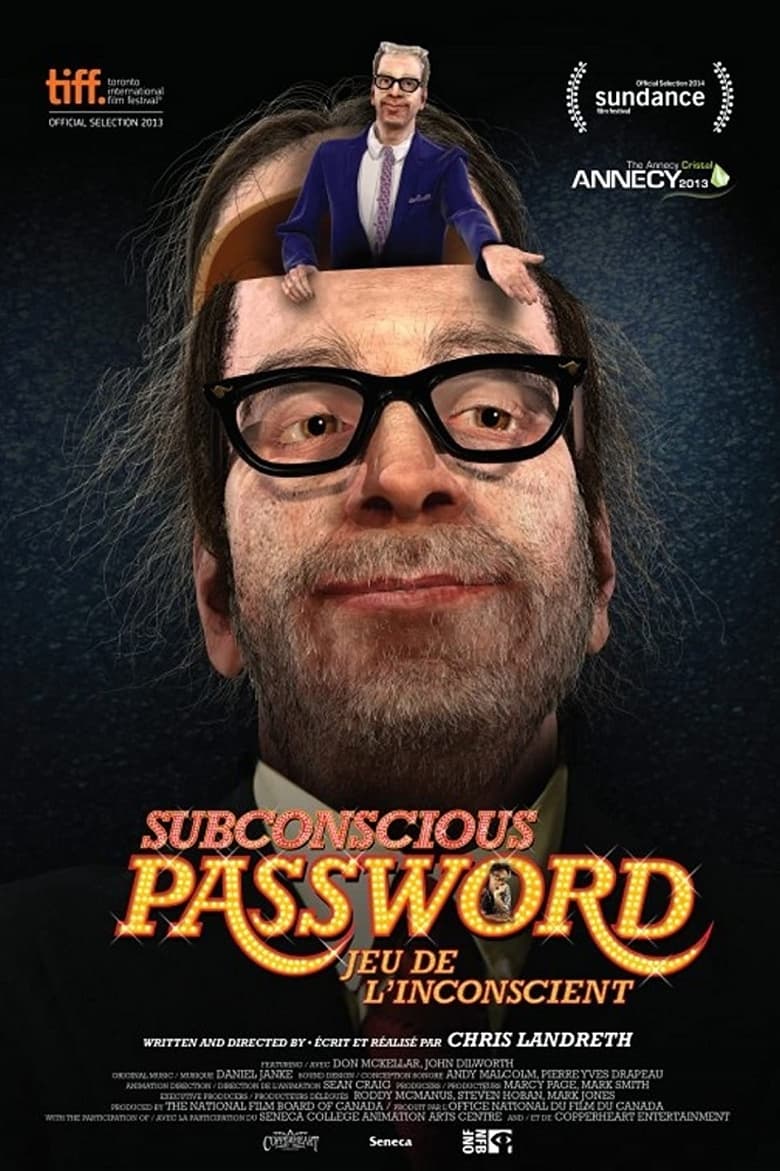
In this short animation, Oscar®-winning director Chris Landreth uses a common social gaffe - forgetting somebody's name - as the starting point for a mind-bending romp through the unconscious. Inspired by the classic TV game show Password, the film features a wealth of animated celebrity guests who try (and try, and try) to prompt Charles to remember the name. Finally, he realizes he will simply have to surrender himself to his predicament.
Overall Score
Fair
Category Breakdown
LGBTQ+ Representation
The film focuses on a surrealist exploration of the unconscious rather than character-driven queer drama. While the non-linear animation disrupts traditional visual expectations, there is no explicit depiction of queer identity.
Gender Representation
The narrative centers on abstract cognitive processes rather than gendered character arcs. Celebrity guests act as archetypal prompts, resulting in a neutral representation that avoids traditional hierarchies.
Racial & Ethnic Diversity
A wealth of animated celebrity guests populates the subconscious landscape. While the medium allows for diverse casting, the specific racial composition of these characters is not explicitly detailed.
Religious & Cultural Diversity
The film deconstructs social performance by framing a common social gaffe as a mind-bending journey. It prioritizes internal reality and subjective morality over the maintenance of rigid social etiquette.
Disability Representation
Landreth provides a sophisticated visual language for neurodivergence and cognitive struggle. The protagonist's memory loss is treated as a landscape to navigate rather than a deficit to be cured.
Strengths
Areas for Improvement
AI Analysis
Subconscious Password is a psychological exploration that prioritizes internal mental landscapes over explicit demographic markers. Its strength lies in its ability to externalize invisible cognitive processes, particularly regarding memory and neurodivergence. By treating the protagonist's struggle as a navigable reality, the film grants agency to the experience of cognitive dissonance. However, the film's abstract nature means it lacks specific, high-agency characters representing diverse racial or gendered identities. The celebrity guests function more as archetypes than as nuanced individuals, leaving the representation of identity largely neutral or undefined. Ultimately, the work excels at challenging social norms and the pressure of social performance. It succeeds as a postmodern critique of social order, even if it does not provide a broad spectrum of visible demographic diversity.
1995

2018

2009
2010

2018
2015
1984
1996
1996
2015

2008
1995
No reviews yet. Be the first to share your thoughts on this movie!
Use the rating form above to leave a star rating and optional review.