Richard Himber and His Orchestra
1935
No user ratings available yet
Representation score: 0.0 out of 10
Representation Score
Limited
1938
ApprovedDirector
Roy Mack
Runtime
9 minutes
Average Rating
No ratings yetNew Showbiz Analysis
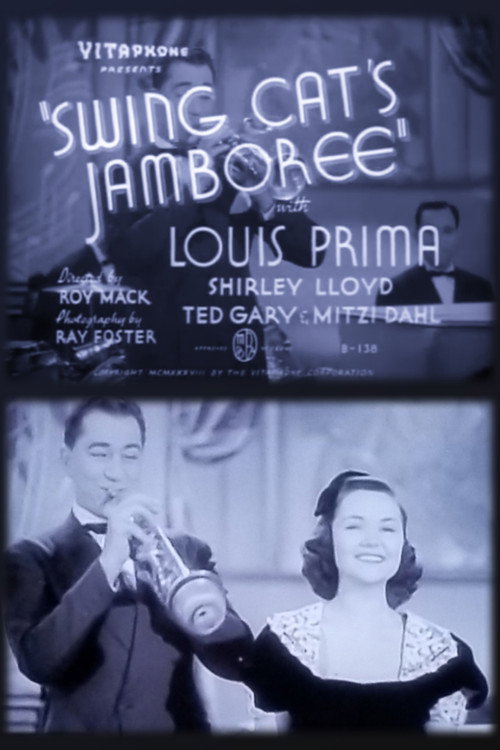
The film opens on the studio logo before cutting to a live stage, where Louis Prima’s face becomes the immediate anchor of visual gravity. This 1938 short subject sells the raw charisma of the swing era, framing musical talent as the sole currency of value. Prima is not a character in a narrative but a performer in a showcase, his Italian-American energy treated as a natural asset rather than a stereotype. The camera lingers on his expressions and direct address, positioning him as the competent center who directs the room’s attention. The gender dynamics are strictly functional: the women are attractive and talented, but they orbit Prima’s musical authority. They are the foil to his wildness, providing the necessary polish to the ensemble without challenging the male-led hierarchy. There is no conflict to resolve and no moral lesson to deliver; the "joke" is the chaotic joy of the performance itself. The film’s argument is simple: music is a source of unmediated pleasure, and the star is the vessel for that pleasure. The final image is a wide group pose, the performers smiling at the camera, reinforcing the "Himself/Herself" billing. This ending rewards the audience with the star’s cohesion and the ensemble’s charm, settling the film’s values in professional merit and entertainment. It does not critique the era’s racial or gender norms but simply embodies them, presenting a white, male-led stage as the natural order of musical excellence. The film is a snapshot of a specific cultural moment, where the legend of the bandleader is the only story that matters.
Category Breakdown
No queer characters or relationships appear in this 1938 short. Performers present as straight, maintaining heteronormative stage dynamics throughout the musical showcase.
Louis Prima commands the stage as the bandleader and visual center. Female performers serve as supportive singers and dancers, reinforcing male musical authority and female decorative presence.
The cast is predominantly white, reflecting 1938 industry norms. Louis Prima’s Italian-American identity is visible but not the subject of racial commentary; he is presented as a standard star.
The film celebrates swing music as a secular, professional art form. It treats merit and entertainment value as the primary cultural goods, with no critique of class or national institutions.
All performers are able-bodied, and disability is not depicted, mentioned, or thematically relevant to the musical performance.
Present on Screen
Limited or Absent
Official Synopsis
"Swing cat" Louis Prima and his jazz quartette play songs and accompany featured singers and dancers.
1935
1938
1933
1935

1942
1942
1942
1942
No reviews yet. Be the first to share your thoughts on this movie!
Use the rating form above to leave a star rating and optional review.