
Chubby Got Guts
2015
No user ratings available yet
Representation score: 2.8 out of 10
Representation Score
Minimal
1974
PGDirector
Ron Walsh
Runtime
90 minutes
Average Rating
No ratings yetNew Showbiz Analysis
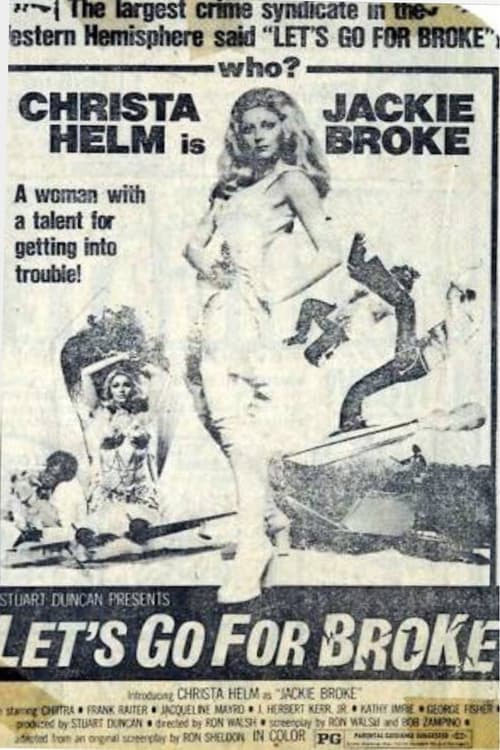
Let's Go for Broke is a product of its era, heavily reliant on traditional masculine archetypes and conventional casting. The narrative structure follows standard action-comedy formulas, focusing on male-driven ability to act and physical capability. While the film lacks diverse representation across gender, race, and identity, it offers some depth through its socioeconomic critique. By showing characters who use deception to survive economic instability, the film challenges the absolute morality of established institutions. Ultimately, the work remains rooted in the social norms of the 1970s, offering a narrow view of identity despite its nuanced take on situational ethics.
Category Breakdown
The film does not include any visible LGBTQ+ characters or markers of non-straight relationships. The story focuses on male-centric partnerships without any queer undertones.
Gender roles are traditional, with the narrative centered around male protagonists. Men play a leading role in driving the story, while female characters tend to have secondary or reactive roles.
The film seems to lack a diverse cast, featuring mostly Anglo-Saxon actors. It relies on conventional casting types typical of the time period.
The film presents a moderate view of moral relativism. It portrays criminal behavior as a practical response to systemic issues and economic hardship.
There is no representation of physical, sensory, or neurodivergent disabilities. Characters are defined by standard physical abilities needed for action-comedy.
Present on Screen
Limited or Absent
Official Synopsis
A TV reporter gets kidnapped to Haiti and fights a series of criminals to rescue other victims and save the world from a secret formula that turns people into ground meat.
2015

2004
1966
1979
1966

1986

2018

2000
No reviews yet. Be the first to share your thoughts on this movie!
Use the rating form above to leave a star rating and optional review.