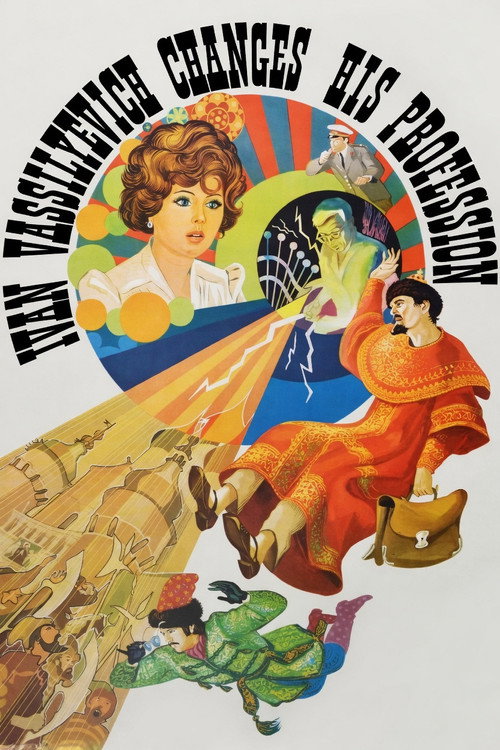
Ivan Vasilyevich Changes His Profession
1973
No user ratings available yet
Representation score: 1.5 out of 10
Representation Score
Fair
1977
Director
Jindřich Polák
Runtime
93 minutes
Average Rating
No ratings yetNew Showbiz Analysis
The film is a genre-driven speculative comedy that prioritizes historical critique over diverse representation. While it successfully challenges fascist narratives, it remains limited by the demographic constraints of its era and region. The primary strength lies in its moral complexity and the disruption of traditional male archetypes through the twin-impersonation plot.
Category Breakdown
The film does not include explicit representations of LGBTQ+ identities or relationships that challenge the assumption that everyone is straight or cisgender. The story centers around a conflict between the protagonist's brother and an antagonist with historical ambitions.
The plot includes a 'woman-chasing' pilot cliché that emphasizes male desire. However, the shift from the original pilot to his earnest brother disrupts the singular, dominant male archetype by emphasizing duty over bravado.
Reflecting its 1977 Czechoslovak origins, the film focuses on European historical and political frameworks. There is no evidence of non-white casting or the use of non-human species as racial metaphors.
The story critiques historical fascism by focusing on a failed mission to restore a Nazi regime. This framework suggests a skepticism toward the permanence of political power and historical morality.
There is no information regarding characters with visible or invisible disabilities. No assessment can be made regarding representation in this category.
Present on Screen
Limited or Absent
Official Synopsis
Former Nazi Klaus Abard survives to the 1990s by taking anti-ageing pills. He plans to use a time travel trip to return to Germany in 1944 and present Hitler with a hydrogen bomb, so that he can win the war. Unfortunately the pilot, woman-chasing Karel Bures, dies on the morning of the trip and his earnest twin brother Jan impersonates him, without knowing about the plot.
1973
1969
1988
2001

1990

2026

2012
2023
No reviews yet. Be the first to share your thoughts on this movie!
Use the rating form above to leave a star rating and optional review.