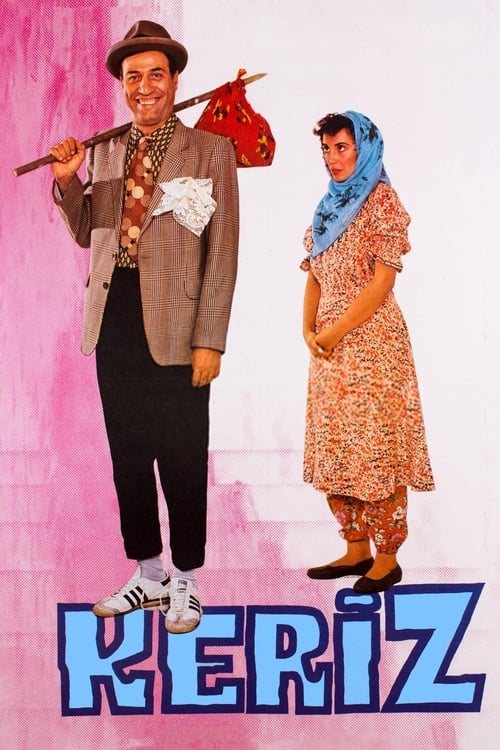
Keriz
1985
No user ratings available yet
Representation score: 1.3 out of 10
Representation Score
Limited
1988
Director
Orhan Aksoy
Runtime
81 minutes
Average Rating
No ratings yetNew Showbiz Analysis
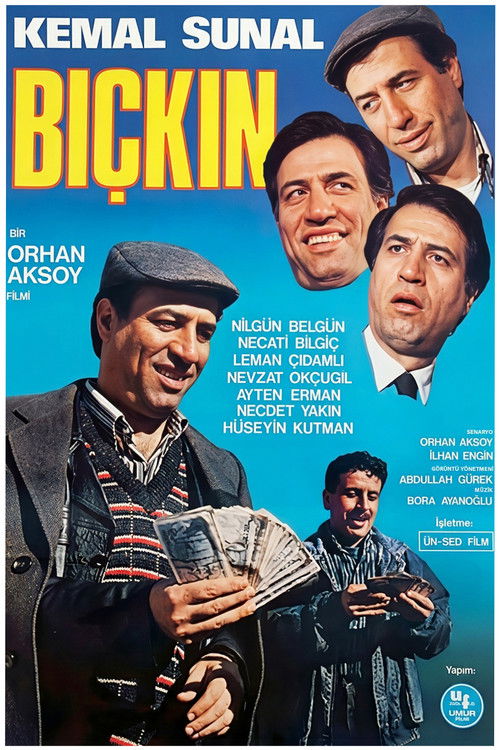
Bıçkın is a quintessential example of period-specific populist cinema that emphasizes class solidarity and traditional romantic clichés. It offers a nuanced look at the socioeconomic realities of the urban poor, subtly questioning the effectiveness of formal institutions through the lens of the working class. However, the film remains firmly within the bounds of traditional social structures. It lacks the intentionality regarding gender, sexual orientation, and diverse identities found in more progressive contemporary works, functioning instead through conventional romantic frameworks. Ultimately, the film is culturally grounded and class-conscious, but its reliance on established archetypes limits its broader representational scope.
Category Breakdown
The film follows the straight-centered standards of late-1980s Turkish cinema. The main conflict revolves around a traditional romantic pursuit between a male protagonist and his female neighbor.
The narrative depends on traditional gender roles. Although the female lead has the opportunity to reject the protagonist, her role is primarily defined by her relationship to male characters.
The cast is predominantly uniform, reflecting the ethnic makeup of Istanbul's working-class neighborhoods. It focuses on the local population but does not intentionally include diverse backgrounds.
The story centers the street-smart rogue archetype and neighborhood-based honor. This focus on the urban working class adds a layer of class-based storytelling.
There are no visible or invisible disabilities portrayed as central to the character arcs or plot development.
Present on Screen
Limited or Absent
Official Synopsis
Ali, who looks exactly like the famous actor Kemal Sunal, is in love with his neighbor Zehra. However, Zehra, who is a fan of Kemal Sunal, does not reciprocate Ali's love. Despite Ali's insistence, she rejects him. Ali will temporarily take Kemal Sunal's place in order to be with Zehra.
1985

1977

2008

2013

1973
1975
1973

1982
No reviews yet. Be the first to share your thoughts on this movie!
Use the rating form above to leave a star rating and optional review.