
Doctor Who: The Seeds of Death
1969
No user ratings available yet
Representation score: 2.0 out of 10
Representation Score
Fair
1967
TV-PGDirector
Marc Daniels
Runtime
50 minutes
Average Rating
No ratings yetNew Showbiz Analysis
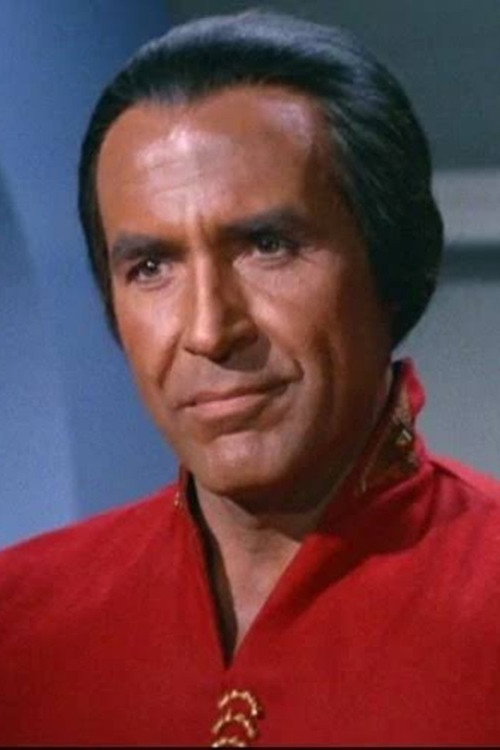
The episode opens on the sterile, routine bridge of the *Enterprise*, a space where order is the default and anomaly is the threat. When the crew discovers the *SS Botany Bay*, they are not just finding a derelict ship; they are uncovering a 20th-century experiment in human perfection. Khan Noonien Singh, played by Ricardo Montalban, is the visual and ideological counterweight to Captain Kirk. His phenotype marks him as the exotic, dangerous “Other,” while Kirk’s Anglo-Saxon normalcy is treated as the baseline of moral authority. The film’s argument is that biological hierarchy, however charismatic, is ultimately illegitimate. Khan’s “superior” genetics make him a tyrant, not a god. The crew’s logic and order are validated as the correct response to his chaos. Yet the ending complicates this verdict. Khan is not killed, shamed, or imprisoned. He is merely suspended, drifting in space with his people. The last image is one of dormant threat, not resolved justice. The “seed” remains planted. The film sells the idea that Starfleet’s secular, meritocratic order is the good, but it also admits that the “other” is not destroyed, only contained. The camera loves Khan’s power even as it labels him evil. The moral arithmetic is that evil is a persistent, biological fact, not a temporary error. The crew’s stability is fragile, and their victory is a pause, not a cure.
Category Breakdown
No queer presence. Marla’s attraction to Khan is strictly heterosexual, serving as tactical leverage. The episode offers no same-sex intimacy or non-binary identity.
Marla McGivers is the primary female presence. Her professional curiosity is overridden by romantic fixation on Khan. She aids the villain but redeems herself by freeing Kirk, restoring male hierarchy.
Ricardo Montalban anchors the conflict as Khan, a Latino-coded actor. His phenotype marks him as the exotic, dangerous “Other” against the unmarked Anglo-Saxon crew. Spock provides a secondary non-white perspective.
The narrative frames 20th-century eugenics as a failed, tyrannical experiment. This validates Starfleet’s secular, meritocratic order. Khan’s “superior” genetics are treated with a mix of threat and charisma.
Suspended animation functions as a plot device, not a depiction of disabled life. The “cure” is technological revival. There is no ongoing impairment or bodily difference explored as identity.
Present on Screen
Limited or Absent
Official Synopsis
While on patrol in deep space, Captain Kirk and his crew find and revive a genetically-engineered world conqueror and his compatriots from Earth's Twentieth Century.
1969
1991

2016

1989

1997
1978
1973
1979
No reviews yet. Be the first to share your thoughts on this movie!
Use the rating form above to leave a star rating and optional review.